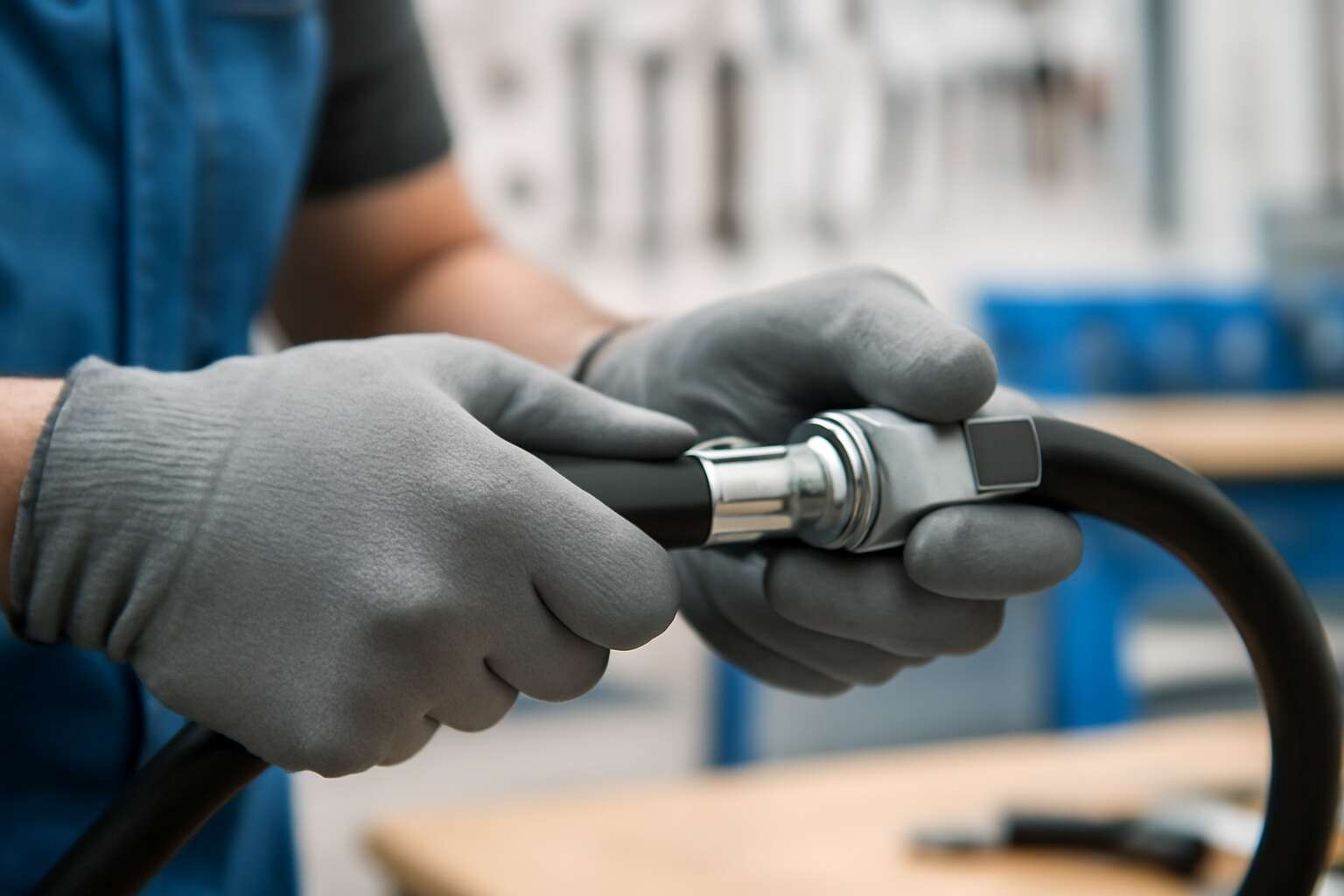
Overview of hydraulic hose assembly careers
What hydraulic hose assembly jobs involve
From Cape Town to Johannesburg, hydraulic hose assembly jobs form the quiet backbone of robust machinery, reflecting a 14% rise in demand for skilled trades in hydraulic systems. The work blends precision, problem-solving, and a touch of artistry, turning stubborn metal into supple conduits that ferry power and pressure. In this realm, a tiny flaw becomes a loud failure, so meticulous measurement and quality checks are the daily rhythm that sustains operations.
Career trajectories hinge on hands-on training, apprenticeships, and quality-control roles that safeguard safety and performance.
- On-the-shop-floor assembly and testing
- Maintenance and field service for hydraulic systems
- Quality control and hose specification documentation
The allure lies in a craftsman’s pride and real, tangible impact on the machines that move the world!
Typical duties and responsibilities in hydraulic hose assembly
In South Africa’s industrial heartlands, hydraulic hose assembly jobs are the quiet heartbeat of reliable machinery. A 14% uptick in demand for skilled hydraulic trades signals that precision conduits are in higher demand than ever, from mines to manufacturing floors. The work feels like craft and engineering fused, turning stubborn metal into the arteries of power.
Typical duties and responsibilities in hydraulic hose assembly unfold with careful precision.
- Interpret schematics and select compatible hose, fittings, and ferrules.
- Measure, cut, and form hose lengths to exact specifications.
- Crimp and assemble components using torque and seating requirements.
- Conduct pressure tests, leak checks, and functional verification.
- Document specifications, maintain quality-control records, and uphold safety standards.
On the shop floor or in field service, professionals blend hands-on skills with meticulous records to keep systems performing under pressure.
Industries that hire for hydraulic hose assembly roles
South Africa’s industrial spine hums with quiet efficiency, and hydraulic hose assembly jobs are the artisans turning torque into trust. Industry pulse checks indicate a 6% year‑on‑year uptick in demand for hydraulic trades, a signal that precision conduits are becoming the backbone of mines and metal-plants alike. This work marries craft with engineering, turning stubborn metal into the lifelines that power presses, pumps, and propulsion.
Industries that hire for hydraulic hose assembly roles across the country include:
- Mining and mineral processing
- Manufacturing and engineering plants
- Agriculture and agribusiness
- Construction and infrastructure projects
- Transport fleets and logistics hubs
- Energy generation and utilities
Career paths are varied, spanning shop-floor technician roles to mobile field-service specialists. The work travels with you—from factory bays to remote plants—demanding practical grit, a flair for problem-solving, and a disciplined respect for safety and quality control. In a landscape where uptime is currency, those who master these skills become the quiet custodians of power.
Required skills and qualifications
Core technical skills for hydraulic hose assembly jobs
The heart of heavy machinery beats through careful hose work—”The hose is the machine’s nervous system,” a veteran fitter once told me. In South Africa, hydraulic hose assembly jobs demand precision under pressure, blending craft with compliance and a steady hand.
Core technical skills form the backbone of every reliable technician.
- Crimping and hose cutting with the correct tooling
- Reading hydraulic schematics and specifications
- Proper hose selection and fitting compatibility
- Rigorous pressure testing and leak detection
Those pursuing hydraulic hose assembly roles in South Africa benefit from a disciplined approach to documentation and safety, along with a trade qualification in fitting or hydraulic systems. A practical mindset, plus the ability to read gauges and manuals, seals the deal.
Education and certification paths for hydraulic hose professionals
‘The hose is the machine’s nervous system,’ a veteran fitter once told me. In the dim glow of a workshop, that truth hums through every bolt and braiding. Across South Africa, this field demands precision under pressure, turning danger into dependable flow.
Education and certification paths shape mastery. For those pursuing hydraulic hose assembly jobs, a fitting or hydraulic systems qualification—earned through an apprenticeship and a Red Seal—marks the threshold. The journey is supported by SETAs and SAQA-recognised programs, weaving theory with competency. Consider these steps:
- Apprenticeship in fitting or hydraulics (Red Seal-ready).
- Red Seal trade test certification.
- NQF-aligned certificate via SAQA-approved programs.
Beyond papers, a disciplined mindset—reading gauges, tracing schematics, logging inspections—cements a technician’s reputation. In South Africa’s demanding environments, credentialed training and on-site grit make quiet guardians of hydraulic lifelines!
On-the-job training and apprenticeships in hydraulic hose assembly
In South Africa’s heavy industries, downtime from hose failures costs real money and lives in the margins of a single shift. For those stepping into hydraulic hose assembly jobs, the first truth is blunt: precision under pressure is the only language that keeps lines flowing and welders calm!
Required skills span practical know-how and disciplined habits: reading gauges, deciphering schematics, selecting the right fittings, verifying torque, performing leak tests, and logging inspections. Safety culture and teamwork underpin everything, because a small misread can ripple into costly downtime.
On-the-job training and apprenticeships blend supervised bench time with real-site challenges. Mentors model procedures, then gradually grant autonomy as competence grows, weaving theory with muscle memory to build confident technicians.
Soft skills that boost success in hydraulic hose assembly roles
In hydraulic hose assembly jobs, the gatekeeper is a blend of formal qualifications and disciplined habits. South Africa’s heavy industries reward technicians who hold recognized hydraulic or mechanical certificates and safety training aligned to local standards, with OSH Act guidelines in mind. Reliability, on-site exposure, and a proven record of precise inspections help keep critical lines in service and downtime at bay.
- Clear, proactive communication with supervisors and team members
- Exceptional attention to detail and methodical problem-solving
- Resilience under pressure and deadlines without compromising safety
- Team orientation and a willingness to mentor others
- Adaptability to changing site conditions and shift patterns
When these qualifications meet the right soft skills, success follows—a steady uptime and safer workplace across SA sites.
Tools, processes, and safety in hydraulic hose assembly
Key tools used in hydraulic hose assembly
The workshop hums with purpose in hydraulic hose assembly jobs. Across South Africa, technicians blend measurement with patience, turning rigid components into a flexible heartbeat for machines. Precision is the pulse, guiding length, bend radius, and compatibility so hoses endure under pressure.
Tools form the backbone of the craft. The right kit turns risk into routine.
- Hydraulic hose cutter with a clean edge
- Crimping tool and dies
- Calipers and tape for exact length
- Pressure testing gauge
- Torque wrench
- Fittings, ferrules, seals
- PPE: gloves, goggles, face shield
A concise process follows measure, cut, fit, and test. Ends are prepared, ferrules seated, and fittings torqued to spec. A hydrostatic test confirms integrity, while lockout-tagout and eye protection guard workers from surprise pressure.
Standard operating procedures for hose assembly
The workshop hums with purposeful gravity, a reminder that hydraulic hose assembly jobs carry both craft and consequence. Across South Africa, technicians blend measurement with patience, turning rigid components into a flexible heartbeat for machines. Precision guides length, bend radius, and compatibility, ensuring hoses endure pressure and time.
Tools form the backbone: calipers, a clean-edged hose cutter, a crimping tool, gauges, and PPE. The standard operating procedure follows a measured rhythm—measure, cut, fit, and test—while fittings, ferrules, and seals lock the path to reliability. A hydrostatic test then confirms integrity, with lockout-tagout and eye protection guarding workers from hidden dangers.
Within this flow, the team embraces safety as a living practice:
- End preparation, ferrule seating
- Fittings torqued to specification
- Hydrostatic test confirms integrity
- Continual PPE and area controls
Safety protocols and compliance in hydraulic hose work
Across South Africa, hydraulic hose assembly jobs demand more than grit; they crave measured swagger and a respect for pressure that would make a steel drum blush. When fittings seat and hoses bend to fit, machines gain a pulse, and the workshop becomes a theatre of reliability. A seasoned fitter once quipped that ‘the squeeze tells the truth’—a reminder that precision occupies the middle ground between art and arithmetic.
Procedures flow like a well-tuned relay: measure with care, cut to spec, fit, and test, all under vigilant supervision. Safety protocols and compliance stay front and centre, with lockout-tagout, PPE discipline, and visible hazard controls shaping every shift. Ongoing training and clear handovers keep errors out of the picture.
- Clear permit-to-work and documented risk assessments
- Ongoing PPE use and zone demarcation
- Peer checks and sign-offs before pressure tests
Career development and job prospects in hydraulic hose assembly
Career paths and advancement in hydraulic hose assembly
Across South Africa’s industrial heartlands, hydraulic hose assembly jobs offer steady, tangible progress. In my experience, career development here isn’t a maze of theory; it’s built on hands-on skill, reliability, and a willingness to learn. Early roles focus on fittings, testing, and quality checks, while promotions bring project exposure, maintenance planning, and safety leadership. From the shop floor to supervisory roles, technicians advance through a practical blend of experience and targeted certificates.
For many readers, the route looks like this:
- Apprentice or technician
- Senior technician or specialist
- Team lead, supervisor, or operations planner
In South Africa, these paths open doors in mining, manufacturing, and energy sectors, with continued upskilling rewarded in hydraulic hose assembly jobs.
Job demand and salary trends for hydraulic hose professionals
Stability is the new currency in South Africa’s workshops, where hydraulic hose assembly jobs keep the wheels turning even as markets wobble. Across mining, manufacturing, and energy, uptime is the bottom line, and hands-on technicians who learn quickly stay in demand. Career progression remains practical: skill, reliability, and a zeal for improvement open doors.
- Maintenance-heavy industries ensuring steady demand
- Projects expanding in mining and power sectors require skilled hose specialists
- Valued certifications and safety credentials boost advancement
- Structured apprenticeships feeding a reliable pipeline of technicians
Salary trends in hydraulic hose assembly jobs track experience and sector heft. Early roles typically command roughly R140k to R200k per year, while mid-level technicians push toward R280k to R420k. Senior technicians and team leads in large mining or energy projects can surpass R600k, especially where safety leadership and reliability are prized.
Certifications that boost employability in hydraulic hose assembly
Career development in hydraulic hose assembly hinges on practical credibility as much as on hands-on speed. In South Africa’s workshops, technicians who keep equipment running and diagnose faults quickly advance into supervision and specialist roles. For hydraulic hose assembly jobs, a strong track record matters as much as grit and reliability.
Certifications that boost employability span safety, testing, and technical mastery. They help you stand out in large mining or energy projects where compliance and quality control count.
- Hydraulic hose assembly certification (aligned to SAQA/NQF standards)
- Lockout/Tagout and PPE safety training
- Pressure testing and leak-detection qualification
- Hydraulic system diagnostics and preventive maintenance certification
Geographic hotspots and industries with the most hydraulic hose assembly jobs
In South Africa’s heavy industries, a single hose failure can stall a shift and burn a fortune—downtime costs climb quickly. That pressure keeps hydraulic hose assembly jobs in strong demand across mines, factories and maintenance fleets, where dependable specialists turn chaos into uptime.
- Gauteng: mining service hubs and heavy manufacturing
- KwaZulu-Natal: mining, port logistics, and steel plants
- Mpumalanga: coal- and energy-related facilities
- Free State/North West: gold, platinum, and processing plants
Geographic hotspots and industries with the most hydraulic hose assembly jobs share one trait: scale. Projects across mining, energy, and manufacturing rely on quick diagnostics and reliable fittings, keeping hydraulic hose assembly jobs moving smoothly as crews grow into supervision and specialist roles.


0 Comments