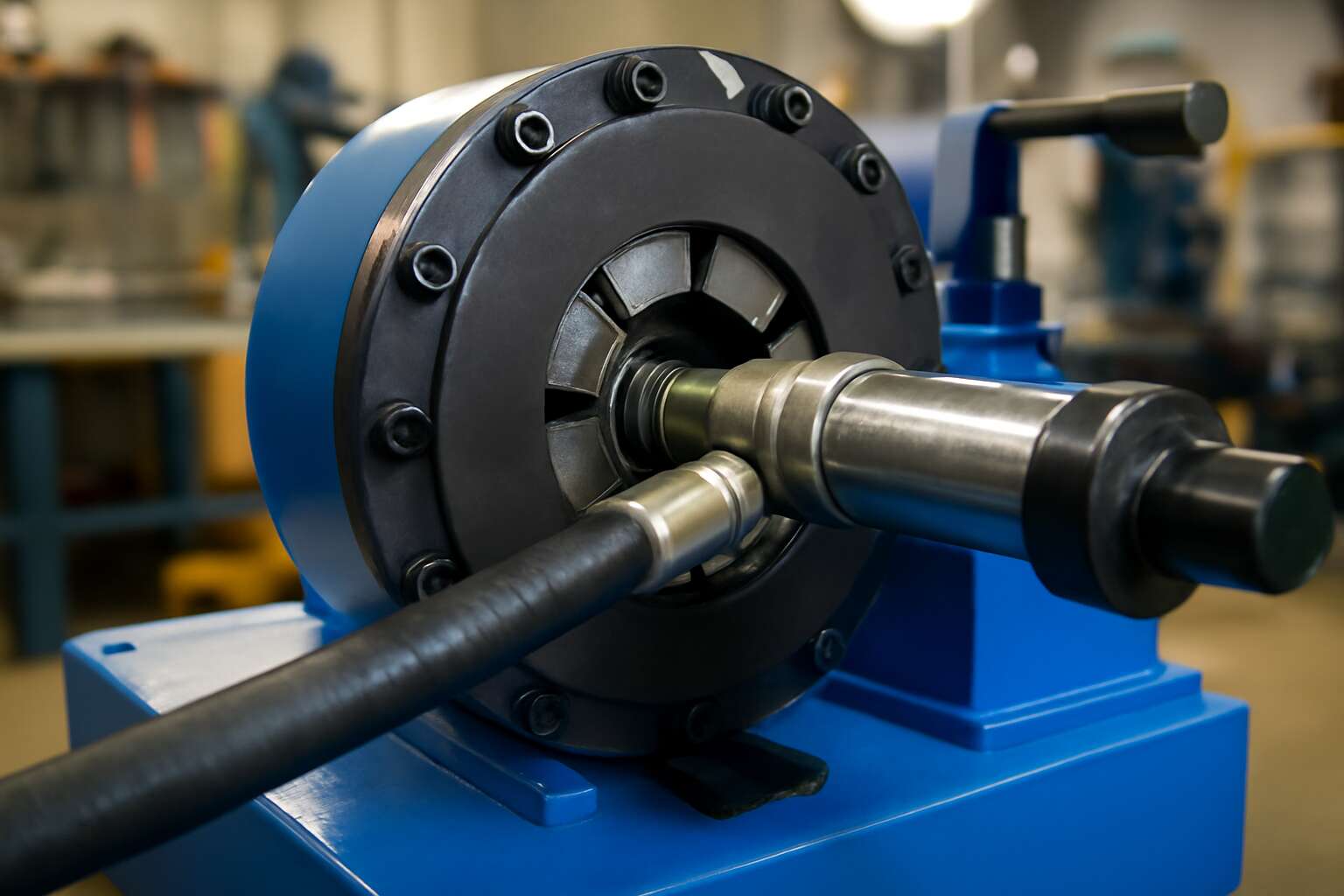
Understanding Hydraulic Hose Crimping Equipment
What is hydraulic hose crimping?
On South African job sites, downtime from hydraulic hose failures can climb 15–25%, turning productive days into quiet stillness. Understanding hydraulic hose crimping starts with the tool itself: the hydraulic hose crimper. It fuses a ferrule around the hose and fitting, sealing like a vow, so pressure stays where it’s meant to be.
The crimp must match hose size and pressure rating. With a reliable hydraulic hose crimper, you get a repeatable seal that resists vibration and heat, a quiet chorus on mining, agriculture, or fleet maintenance.
Key features include:
- Crimp dies matched to hose size
- In-line pressure control for consistency
- Built-in gauge or monitor for accuracy
Choosing the most suitable tool blends reliability with resilience, turning routine assemblies into well-tempered, lasting connections.
Core components and how the system works
Across South Africa’s bustling sites, hose failures can pause an entire shift, with downtime edging toward 20% of productive hours. The hydraulic hose crimper sits at the heart of fast, reliable repairs, fusing hose and ferrule into a trusted seal that stands up to heat and vibration.
Understanding its core requires a map of the essential components:
- Hydraulic power unit and ram
- Die heads with matched inserts
- Inline pressure control for consistency
- Built-in gauge or monitor for accuracy
When powered, the hydraulic hose crimper drives a ram that compresses and seats the ferrule around the hose and fitting. The die head, with the right inserts, shapes the ferrule for a repeatable, vibration‑resistant seal; an inline control and gauge keep the pressure within a tight window.
On SA sites, this arrangement keeps assemblies performing under heat and hustle.
Common applications across industries
Across South Africa, downtime devours productivity as hose failures pause shifts. The hydraulic hose crimper anchors rapid, repeatable repairs, fusing hose and ferrule into a seal that withstands heat and vibration.
From mines and sugar mills to fleet depots and factories, these machines prove versatile across industries. Consider the common applications that keep critical lines moving:
- Mining and quarry equipment
- Agriculture, irrigation, and agro-processing
- Construction sites and earthmoving machinery
- Industrial hydraulics in manufacturing plants
- Transport fleets and mobile service units
In practice, teams rely on repeatable crimps that resist heat, vibration, and pressure spikes during busy shifts. A reliable hydraulic hose crimper helps maintain uptime across demanding environments—from dusty mines to rain-washed river ports.
Advantages and limitations of hydraulic crimping
In South Africa’s demanding fieldwork, downtime costs more than money—it’s momentum lost. The hydraulic hose crimper delivers rapid, repeatable crimps that fuse hose and ferrule into a seal built to withstand heat and vibration.
Key advantages include:
- On-site capability speeds repairs and reduces transport.
- Consistent crimps minimize leaks in dusty or humid conditions.
- Versatility across hose sizes with interchangeable dies.
Limitations include:
- Requires proper calibration and training.
- Initial cost and maintenance demand budgeting.
- Power source and hydraulic fluid cleanliness matter.
In the field, a tool that respects heat, vibration and pressure spikes keeps critical lines moving—translating into real uptime on South Africa’s sites.
How hydraulic crimping compares to alternative hose assembly methods
In South Africa’s rugged fieldwork, downtime is a currency you can’t afford. The hydraulic hose crimper is a craftsman’s ally, fusing hose and ferrule into a seal that endures heat, vibration, and the harshest dust. Understanding the equipment behind this craft reveals a tool built for resilience and speed.
Compared with other hose-assembly methods, hydraulic crimping offers consistency where leaks bite hardest. Here are the contrasts that matter:
- Precision and repeatability for reliable seals in dusty environments
- On-site speed and portability that cut transport costs
- Scalability across sizes with interchangeable dies
Other methods rely on clamps, soldered joints, or mechanical swaging, which can falter under heat spikes and rough terrain. In South Africa’s demanding environments, this contrast is felt in maintenance cycles and reliability.
Key Features and Specifications to Compare
Crimp force, die compatibility, and sizing
Power is measured in tonnage, not temperament. A hydraulic hose crimper translates force into a sealed, durable connection every time. When evaluating key features and specifications, three elements matter most: crimp force, die compatibility, and sizing. For SA workshops, a unit with adjustable tonnage, a broad die library, and precise sizing delivers steady performance on the workshop floor.
Key specs to compare include:
- Crimp force range: adjustable from 6 to 60 tons for common hose types
- Die compatibility: interchangeable dies for standard diameters
Sizing accuracy ensures consistent seals and safe operation in harsh environments found in South Africa.
Control systems, automation options, and safety features
In South Africa’s workshops, uptime is king. The right hydraulic hose crimper can shave cycle times and boost reliability, turning bottlenecks into throughput. Key features to compare include control systems, automation options, and safety features.
Control systems determine how smoothly the unit runs. Options range from manual levers to electric drives and PLC-based interfaces with touch screens, offering precise cycle control and repeatable performance in busy shops.
- Semi-automatic cycling with push-button start
- Fully automatic sequencing with job memory
- Remote monitoring and diagnostics for uptime insights
Safety features protect people and equipment: overload protection, emergency stop, interlocks, protective guards, and safe die-access routines that keep operators out of harm’s way during operation.
Portability, power options, and duty cycle
A robust hydraulic hose crimper earns its keep in a busy South African workshop, where uptime is king. Portability, power options, and a capable duty cycle define where the unit fits—from compact bays to on-site service. A dependable model blends a compact footprint with a solid frame and easy access for quick setup.
- Compact footprint for tight spaces
- Lightweight with a wheeled base for easy relocation
- Integrated handles or lifting points for safe handling
Power options vary: 230V single-phase for shop floors, 3-phase for heavier demand, or portable petrol/hydraulic drives for field work. The duty cycle is measured in cycles per hour and in continuous operation capability; look for thermal protection and automatic cool-down to prevent overheating and keep throughput steady. This balance matters when you must complete multiples without slowing down.
Material compatibility and hose/fitting types
Key Features and Specifications to Compare begin with material compatibility and hose/fitting types. A capable hydraulic hose crimper handles stainless steel, braided steel, rubber, and synthetic hoses with equal care. Look for die sets and jaws that support common SA fittings—1/4, 3/8, and 1/2 inch—and a design that resists corrosion in busy workshops and on-site service calls.
Consider the range of compatible materials and the variety of hose and fitting types the unit can tame. The hydraulic hose crimper you choose should offer interchangeable dies, a secure clamping system, and clear, repeatable crimp dimensions. You’ll feel the difference in field service!
- Material compatibility: nitrile, neoprene, polyurethane, rubber
- Hose types: rubber, thermoplastic, wire-braided
- Fittings: JIC, NPT, BSP
- Die size ranges for common SAE connections
Maintenance friendliness, warranty, and service support
Power and patience, the hydraulic hose crimper is a workshop compass that stays true after hours of grease and grit. Maintenance friendliness matters: look for quick die changes, accessible lubrication points, and a robust frame that shrugs off South Africa’s dusty workshop days. A unit that rewards tidy upkeep saves time when margins are tight.
- Maintenance friendliness: fast die swaps, clear alignment marks, and minimal calibration steps.
- Warranty and parts: clear coverage with readily available spare components from SA distributors.
- Service support: local technicians, on-site service options, and optional remote diagnostics that reduce downtime.
Choose a partner that mirrors your pace: dependable service networks, transparent terms, and a promise of uptime that keeps projects moving.
Choosing the Right Tool for Your Operation
Assessing workload, frequency, and throughput
Uptime is the heartbeat of every workshop, and the right tool can shave minutes off each joint—some shops report a 25% faster cycle when the system aligns with their workload. The choice isn’t merely about capacity; it’s about rhythm, cadence, and the courage to invest in durability. A hydraulic hose crimper becomes more than equipment—it is a trusted partner in the field.
To choose wisely, weigh three core factors that determine daily performance.
- Workload and duty cycle alignment
- Maintenance cadence and serviceability
- Throughput consistency and operator comfort
Across South Africa’s workshops, blends of grit and grace shape outcomes. The right tool respects the craftsman’s hands, reduces rework, and keeps teams moving toward the next horizon.
Matching hose diameters, fittings, and length ranges
Across South Africa’s workshops, a clean fit between tool and task can shave minutes off every joint. A fresh statistic shows up to 28% faster cycle times when the setup mirrors the workload. A hydraulic hose crimper is more than hardware—it’s a steadfast partner that keeps rhythm with the job, guiding hose diameters, fittings, and length ranges to align with real-world tasks!
Choosing the right hydraulic hose crimper begins with the hose itself: diameter, fittings, and the length you need. Look for equipment that covers the full range—from compact 6 mm lines to large 50 mm cores—and supports common fittings (NPT, ORB, JIC, metric).
Consider these quick checks:
- Diameter and wall thickness compatibility
- Fitting types and thread standards
- Length range for on-site assemblies
Durability, service, and warranty matter as much as the specs, because steady uptime is the real edge in South Africa’s markets!
Budgeting and total cost of ownership
That 28% faster cycle time, achieved when the setup mirrors the workload, isn’t an aberration—it’s a blueprint. In South Africa’s workshops, smart budgeting follows layout as surely as torque follows crank. A hydraulic hose crimper is more than hardware—it’s a steady partner that keeps pace with the job, aligning diameter, fittings, and length with the rhythm of the day.
- Upfront price and financing terms
- Maintenance and parts availability
- Downtime impact and productivity
- Warranty and local service network
Choosing a tool that fits workload means looking beyond sticker price to service reach, warranty, and energy efficiency. A well-sized option trims unnecessary downtime and keeps the workshop singing. I watch the balance between price and reliability in real time.
When numbers align, the ROI isn’t just a number—it’s cadence and confidence in every joint.
Vendor support, training, and service plans
In South Africa’s busiest workshops, uptime isn’t a luxury—it’s a currency. A dependable hydraulic hose crimper can shave hours from a week when spares, support, and service are in step with the workload. When the tool earns trust through accurate crimps and consistent performance, teams stay in rhythm and avoid costly interruptions. It’s not just hardware; it’s a collaborator that breathes with the day’s tempo.
Choosing the right partner means weighing vendor support, training, and service plans as carefully as you would the core features. A solid program covers onboarding, scheduled maintenance, remote diagnostics, and timely parts delivery—so crews never stall at the worst moment.
- On-site and remote operator training
- Predictable maintenance windows and timely parts
- Comprehensive warranty and local service access
Future-proofing: scalability and optional upgrades
In South Africa’s busiest workshops, uptime is the true currency. For operations that grow, the best choice is a hydraulic hose crimper built to evolve, not stand by. With scalable upgrades, you can expand die sets, tighten control, and adapt to higher throughput without swapping rigs—preserving momentum as demand shifts.
- Modular die kits that expand range
- Remote diagnostics and software upgrades
- Flexible power options and easy serviceability
Future-proofing through thoughtful upgrades turns this tool into a lasting partner in the workshop’s daily tempo.
Best Practices for Safe Operation and Longevity
Pre-use inspection, PPE, and safety protocols
Best practices for safe operation start with a disciplined approach to pre-use checks and proper PPE. The hydraulic hose crimper should be treated as a critical tool, not a disposable gadget, because a small oversight can turn into a costly setback. Inspect hoses and fittings for wear, ensure dies match the hose size, and test the machine at idle to confirm controls respond smoothly.
Pre-use checks and PPE are non-negotiables for safe operation. The space is prepared; hoses and fittings are checked; the die set is verified before balancing pressure.
- Safety glasses or face shield
- Cut-resistant gloves and sturdy footwear
- Hearing protection in loud environments
- Well-lit, uncluttered workspace with secure hose routing
In busy South African workshops, safety discipline matters; the finished assembly is checked for uniformity and leaks, and the equipment remains ready for the next cycle.
Lockout/Tagout and safe operating procedures
A disciplined workspace breathes life into every operation; the hydraulic hose crimper earns its keep through quiet vigilance and care. Unplanned downtime erodes margins more quickly than you expect.
Safe operating procedures and Lockout/Tagout routines guard the shop against surprises, turning potential setbacks into mere footprints on a well-told workday.
Key guardrails include:
- Lockout/Tagout compliance is non-negotiable
- Clear energy isolation and verification
- Auditable procedures and training records
- Regular maintenance windows and equipment readiness
In bustling South African workshops, this discipline translates to consistent quality, safer teams, and equipment that remains poised for the next cycle, season after season.
Die selection, calibration, and replacement intervals
Best practices for safe operation and longevity start with thoughtful die selection, precise calibration, and sensible replacement intervals. In the shop’s quiet rhythm, the hydraulic hose crimper delivers consistent seals when dies fit hose diameters and fittings and the stroke is tuned for repeatable crimps. Worn dies must retire before they compromise quality or throughput, preserving margins through every shift.
- Die selection criteria: material hardness, wear resistance, and compatibility with hose and fittings; ensure grooves and dimensions preserve seal integrity.
- Calibration cadence: schedule regular checks of crimp height against standard samples and record drift to support maintenance planning.
- Replacement triggers: wear indicators, cracks, or loss of repeatability signal it’s time to refresh dies and fixtures.
These guardrails sustain safety, precision, and readiness for the next run in South Africa.
Maintenance scheduling, lubrication, and diagnostics
Uptime hinges on a simple truth: planned service beats emergency downtime every time. In South Africa, the hydraulic hose crimper benefits from a steady cadence that keeps seals precise and operators confident. I start with a daily pre-use check—leaks, guard clearances, and fluid levels—then apply a light touch of lubricant to pivots and guides to cut wear. Cleanliness matters; fresh, compatible lubricants protect elastomer seals and sliding surfaces from grit and heat.
Diagnostics are about listening for whispers before they become alarms. I log crimp height against reference samples, watch return strokes, and note any drift or temperature spikes. A short, weekly inspection of hoses, fittings, and connections flags trouble early. By coupling routine lubrication with vigilant diagnostics, we keep the tool delivering repeatable, safe crimps job after job.
Storage, transport, and end-of-life considerations
In South Africa’s sun-bleached workshops, the hydraulic hose crimper hums at the heart of every trusted assembly. “Care is the drumbeat of uptime,” a veteran technician reminds us, and that cadence guides our approach to safe operation and longevity. By honoring its life cycle—storage, transit, and the quiet, considered end of use—we protect seals, preserve performance, and keep the line moving with confidence!
Respectful stewardship means guarding the tool from dust, heat, and solvent drift, and choosing transport that minimizes jolt. When retirement finally beckons, a forward-looking plan for recycling, refurbishment, and vendor take-back options keeps the lifecycle honest and economical in South Africa’s demanding settings. This is how the hydraulic hose crimper earns a second life.
- Recycling and refurbishment pathways
- Vendor take-back programs for worn components
- Documentation for asset retirement and audits


0 Comments