
Role overview and responsibilities in hydraulic hose service
Core duties and daily tasks in service and installation
As a hydraulic hose technician, I safeguard plant uptime by designing, assembling, and maintaining hose systems that power heavy machinery across South Africa. Across SA mines and workshops, hose failures drive costly downtime, so quick, precise work matters. Every day brings a mix of inspection, measurement, and careful fitting to ensure reliable pressure performance and worker safety. Precision, a steady hand, and practical problem-solving guide decisions from procurement to on-site testing.
Core duties and daily tasks include:
- Assess hose condition and fittings wear, documenting the state of components
- Cut, bend, and crimp hoses to exact lengths and specs
- Install assemblies on equipment and perform pressure tests
- Troubleshoot leaks, replace damaged components, and log service records
Typical work environments and shift patterns
A hydraulic hose technician keeps the machines humming in South Africa’s heavy industries. Think of me as the bridge between engineering diagrams and a working hose assembly, turning prints into leak-free, pressure-ready lines that power excavators, conveyors, and pumps on site.
My responsibilities lean toward safety, reliability, and practical problem solving. I read hydraulic layouts, select fittings, and route hoses to minimize wear, then perform pressure tests and log results so the team can keep downtime to a minimum. It’s the kind of meticulous, almost ritual, work that keeps the plant from slipping into a leakocalypse.
Typical work environments for a hydraulic hose technician include:
- Open-pit and underground mines
- Mining workshops and service bays
- Remote field locations and mobile service rigs
- Industrial plants and manufacturing yards
Shift patterns reflect the demands of South Africa’s heavy industries, with long days, rotating rosters, and on-call weekends. Some roles run 12-hour cycles, others fit 8-hour shifts with standby coverage for emergencies, all designed to keep critical hoses intact and uptime high for the hydraulic hose technician.
Customer-facing service excellence and field etiquette
Across South Africa’s heavy industries, a hydraulic hose technician is the quiet uptime architect—preventing leaks before they become costly surprises. They translate engineering diagrams into leak-free, pressure-ready lines that power excavators, conveyors, and pumps when the shift clangs to life.
Role overview and responsibilities in hydraulic hose service lean into customer-facing service excellence and field etiquette. Think clear on-site communication, neat hose routing, and a calm, professional presence, even when the yard is a carnival of machinery and sparks.
- On-site courtesy with operators and supervisors, no shouting over belt drives
- Strict safety discipline, PPE compliance, and tidy hose management
- Thoughtful responses to client questions and clean project handoff
Skills, certifications, and training for hydraulic hose systems
Technical knowledge of hydraulic theory and hose construction
“The hose isn’t just a tube; it’s the lifeline of the machine,” notes a veteran South African technician. A skilled hydraulic hose technician keeps plants moving and downtime shrinking in the heat of real-world production.
For the hydraulic hose technician, technical knowledge of hydraulic theory and hose construction is non-negotiable. Skills span reading schematics, selecting compatible hoses and fittings, performing precision crimping, and conducting safe pressure tests. Certifications, preferably TETA- or SAQA-accredited, validate competence and early-career growth and emphasize safety and reliability.
- Understanding hydraulic theory and system dynamics
- Proficiency in hose assembly, crimping, and leak testing
- Safety compliance, PPE use, and hazard awareness
Ongoing training, vendor workshops, and hands-on mentorship ensure the hydraulic hose technician stays current with evolving materials and tools across South Africa’s diverse industries.
Industry certifications and training programs
On South Africa’s factory floors, downtime can cost tens of thousands per hour—and the hydraulic hose technician who can mitigate that risk is a rare, in-demand craftsperson. Mastery begins with a blend of hands-on skills and formal credentialing, not guesswork.
Skills: reading schematics, selecting compatible hoses and fittings, precision crimping, and performing leak tests with calm under pressure. Certifications, preferably TETA- or SAQA-accredited, validate competence and provide a ladder for early-career growth while underscoring safety and reliability.
Training: ongoing, vendor workshops, and mentorship help the team stay current with evolving materials and tools across South Africa’s industries. A structured path—through recognized programs and practical clinics—keeps the plant’s lifeblood steady.
- Vendor-sanctioned workshops
- SAQA- and TETA-accredited programs
- Hands-on mentorship and apprenticeships
On-the-job learning and apprenticeships
Skills form the backbone of a reliable hydraulic system. The hydraulic hose technician reads schematics, selects compatible hoses and fittings, performs precision crimping, and runs leak tests with a steady, even hand. In the bustling South African factory floor, these minute judgments prevent costly downtime and keep lines flowing when pressure spikes.
Certifications act as a ladder to mastery. SAQA- and TETA-accredited credentials validate competence and safety, signaling reliability to managers and clients alike.
- Vendor-sanctioned workshops
- SAQA- and TETA-accredited programs
- Hands-on mentorship and apprenticeships
Training is ongoing: vendor workshops, practical clinics, and hands-on mentorship keep pace with new materials and tools across the country. On-the-job learning and apprenticeships turn potential into precision, ensuring every hydraulic hose technician grows with the plant.
Credential maintenance and continuing education
The skills behind a hydraulic hose technician stay sharp through constant credential maintenance and ongoing education. In SA plants, competency isn’t a one-off achievement—it’s a moving target shaped by new materials, safer testing methods, and tighter reliability standards. Continuous learning translates into fewer downtime moments and steadier flow under pressure.
- Renewal cycles and periodic safety requalification
- Micro-credentials that certify mastery of new hose materials and test methods
- Hands-on clinics and vendor-led refresh sessions that translate theory into field-ready practice
These elements frame the role as a resilient professional whose credentials stay current with each shift on the factory floor.
Safety, standards, and compliance in hydraulic hose work
OSHA guidelines and safety standards
Heavy machinery hums with power, and a single failed hydraulic hose can halt an entire project in minutes. In South Africa, safety culture is more than a rulebook—it’s a shield against downtime and injury. OSHA guidelines and global safety standards shape everyday decisions on the shop floor, guiding how hoses are selected and tested. This is the realm where the hydraulic hose technician keeps risk at bay and reliability intact.
Compliance hinges on clear principles rather than guesswork.
- Personal protective equipment standards
- Hazard communication and labeling
- Regular inspection and tagging of hoses
- Documentation and audits
As the frontline guardian of integrity, safety is sustained while operations push forward.
Personal protective equipment and safe handling
South Africa’s workshop tempo rewards those who treat safety as a living culture, not a form you fill out at year-end. A hydraulic hose technician stays ahead of downtime by aligning practice with global standards and clear risk controls. Safety and reliability go hand in hand on every job site.
- gloves with cut resistance and chemical protection
- eye and face protection (goggles or face shield)
- respiratory protection when dust or fumes are present
- steel-toe boots and flame-resistant clothing
Clear labeling, regular hose inspection, and thorough documentation keep the chain honest and audits painless—every hinge point checked, every hose tagged, every risk mapped. That role brings speed with safety and rigor to the table.
Quality control, testing methods, and documentation
Culture beats checklist every time: “Safety is a culture, not a checkbox,” a veteran shop foreman likes to say. In hydraulic hose work, that mindset keeps downtime down and costs sane. As a hydraulic hose technician, you treat every bend and coupling as a promise—quality control begins the moment a hose enters the bench and ends only when the system runs cleanly.
Quality control isn’t a mystery; it’s a ritual of checks that travel with the hose from shop to site. This practical discipline keeps failures at bay and performance sharp.
- Hydrostatic pressure testing to verify integrity at operating pressures
- Non-destructive examination of hose layers and fittings
- Traceable, tamper-evident documentation and labeling
Documentation, audits, calibration: compliance isn’t glamorous, but it keeps engines purring and clients smiling. Standards-aligned practices ensure every job site adheres to clear risk controls, with auditable records that survive the longest shift and the toughest inspection.
Diagnostics, maintenance, and failure prevention for hydraulic hoses
Diagnosing leaks, wear, and damage
A seasoned hydraulic hose technician knows that a whisper of a leak is a scream waiting to happen. In South Africa’s rugged workshops, leaks reveal themselves as damp patches, heat haze on jackets, or a sudden drop in pressure. “A small crack today saves a catastrophe tomorrow,” a veteran likes to say, and diagnostics chase these signs with visual checks and pressure traces to catch wear at bends and fittings.
Maintenance isn’t glamorous, but it pays. Routine checks focus on clean connections and correct routing to prevent chafe. Indicators to watch for include:
- Cracks, bulges, or abrasion on the hose jacket
- Leaks, damp patches, or sudden pressure drops
- Loosened clamps or damaged ferrules at fittings
Failure prevention hinges on thoughtful routing, heat management, and environmental protection. Shield hoses from radiant heat, keep oils and chemicals from jackets, and replace aging lines before telltale cracks widen. Documentation and ongoing training keep the system ahead of trouble for the hydraulic hose technician, turning potential crises into controlled, almost inevitable outcomes.
Diagnostics tools and techniques
A small crack today saves a catastrophe tomorrow. In South Africa’s rugged workshops, the hydraulic hose technician reads the telltales: heat haze on jackets, damp spots, and a whispered drop in pressure. Diagnostics fuse seasoned eyes with pressure traces to catch wear at bends and fittings before it becomes a failure.
- Infrared thermography to spot heat differentials
- Portable pressure transducers for real-time monitoring
- Ultrasonic or dye-based leak detection for elusive seepage
Maintenance follows the diagnostics—less a ritual, more a discipline. Clean connections and proper routing protect hoses from chafe and heat, while environmental protection ideas guard against oils and chemicals. For the hydraulic hose technician, each reading shapes proactive planning, converting near-misses into predictable outcomes rather than surprises.
Repair versus replacement decision making
As a hydraulic hose technician in South Africa, I read the telltales: heat haze on jackets, damp spots, a whispered drop in pressure. Diagnostics blend seasoned eyes with data: infrared thermography spots heat differentials, pressure transducers give real-time insight, and dye-based tests reveal hidden seepage before it spreads.
Maintenance follows the diagnostics—less a ritual, more a discipline. It’s about preserving integrity: routing that respects movement, barriers that prevent chafe, and environments that shield hoses from oils and chemicals.
Repair versus replacement decision making comes into play as wear is quantified. When corrosion, compromised fittings, or repeated leaks erode reliability, the choice hinges on safety, downtime, and total cost, turning near-misses into predictable outcomes.
Preventive maintenance scheduling and checklists
A cross-country truth from South Africa’s heavy industries: one overlooked hose fault can steal hours from production. Diagnostics blend instinct with data—the dance of heat shadows, pressure tremors, and movement whispers that only a hydraulic hose technician can read. Signals converge, exposing hidden wear before it blooms.
- Heat signatures
- Irregular vibrations
- Chafe signs
Maintenance becomes a disciplined ritual, a rhythm that keeps the machine’s heartbeat steady. Preventive maintenance scheduling and checklists form the cadence, aligning oversight with production tempo and preserving integrity in harsh environments.
Failure prevention hinges on safety and uptime. Quantified wear and lifecycle thinking guide anticipation, with meticulous documentation that charts trends over time. In South Africa’s workshops, foresight turns near-misses into predictable outcomes!
System priming, bleeding, and flow restoration procedures
A single hour of unplanned downtime can derail a shift on South Africa’s busy production floors. Diagnostics, maintenance, and failure prevention for hydraulic hoses rely on the steady eye of the hydraulic hose technician—someone who reads heat signatures, irregular vibrations, and chafe signs before a problem blooms.
System priming, bleeding, and flow restoration are the heartbeat of restoration work when hoses are disturbed.
- Circuits are primed to expel air and ensure fluid reaches every sleeve.
- Reservoirs and lines are bled until clean, bubble-free fluid appears at outlets.
- Flow restoration follows with cautious pump cycling while monitoring pressure and temperature for stability.
Meticulous documentation and trend data help anticipate wear and prevent repeat disturbances. In the field, uptime and safe operation become the real currency of performance.
Tools, equipment, and workflow for hydraulic hose service
Cutting, crimping, and fitting tools for hose assemblies
In South Africa’s field hydraulics, a well-executed hose assembly keeps machines singing and downtime at bay. Industry data shows roughly 15% of hydraulic failures trace to poorly prepared lines—a reminder of the craft behind the hydraulic hose technician.
Tools and equipment form the backbone: precision hose cutters, deburring tools, ferrule sets, and rugged crimping units. For the hydraulic hose technician, swagers, calibrated fittings, and a reliable torque wrench keep assemblies aligned with the system’s heartbeat. The result is clean, dependable seals under tough workplace conditions!
Workflow emphasizes mindful sequence—measurement, cutting, finishing, then testing. This cadence preserves seal integrity and fluid paths, even in hot, dusty workshop bays common to South Africa’s field jobs.
- Preparation and measurement
- Cutting and finishing
- Fitting and securing
- Quality check and documentation
Routing, layout, and hose routing best practices
In South Africa’s field hydraulics, roughly 15% of failures stem from misrouted hoses and cramped runs—an oft-repeated reminder of the artistry behind every hydraulic hose technician. Their work keeps heavy machines singing on long shifts, in heat and dust alike.
Routing starts with planning and protection. Routes avoid sharp bends, heat, and abrasion, while clamps, protective sleeves, and tie-straps keep lines stable.
- Unobstructed flex paths
- Secure brackets and sleeves
- Clear route labeling
In the workshop and veld, the routine blends measurement with method—sketching routes, trimming with care, final checks. The technician visualises the system’s heartbeat before clamps bite into place, ensuring seals and fluid paths stay true under load.
With the right tools and routing discipline, service teams sustain operation and safeguard downtime across South Africa’s diverse work sites.
Mobile service setups and field logistics
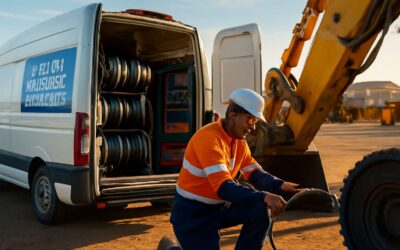
Mobile service setups are the difference between a stalled harvest and a rolling season. In South Africa’s field hydraulics, a well-equipped van slashes downtime by up to 30%, turning heat, dust, and rough terrain into a portable workshop. The hydraulic hose technician arrives with a toolkit that anticipates every bend, clamp, and snag before it bites.
Core tools and equipment for on-site service include:
- Portable hydraulic power unit
- Crimpers, cutters, and wrenches
- Spare hoses, fittings, and protective sleeves
- Test gauges, dye tracer, and handy diagnostic sticks
Workflow on the move blends brisk assessment with careful execution. The hydraulic hose technician maps clusters of lines, secures them with clamps and sleeves, and runs a quick priming check to ensure seals hold under load, no drama required.
Documentation, warranties, and service reporting
Mobile service setups are the difference between a stalled harvest and a rolling season. In South Africa’s field hydraulics, the hydraulic hose technician arrives with a portable workshop that cuts downtime by up to 30%.
The toolkit is compact, but complete:
- Portable hydraulic power unit
- Crimpers, cutters, and wrenches
- Spare hoses, fittings, and protective sleeves
- Test gauges, dye tracer, and diagnostic sticks
Workflow on the move blends brisk assessment with careful execution. The technician maps clusters of lines, secures them with clamps and sleeves, and runs a quick priming check to ensure seals hold under load, no drama required.
Documentation, warranties, and service reporting cap the job, ensuring every repair leaves a traceable record with part numbers, warranty terms, and a timestamped service report for future maintenance.



0 Comments