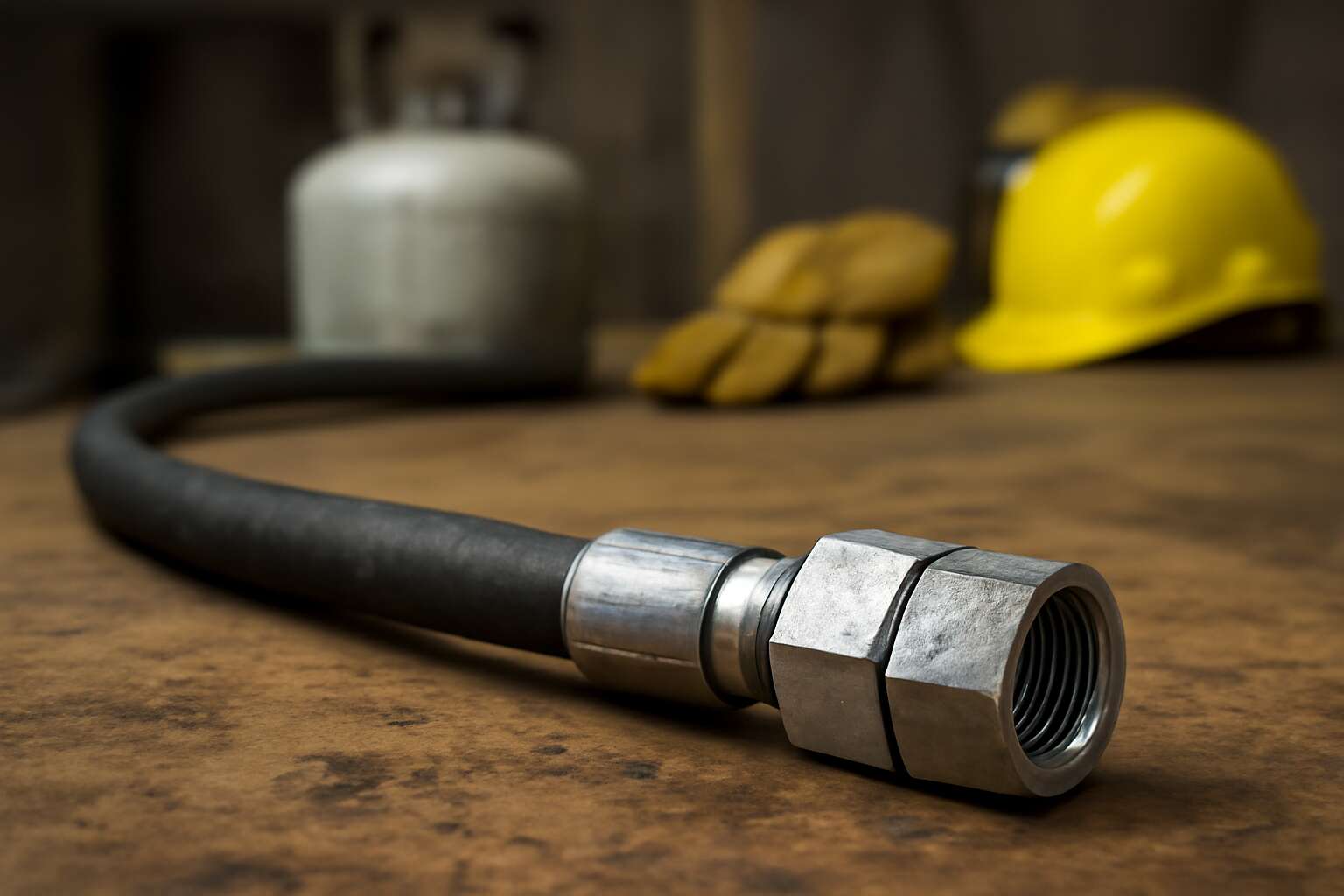
Propane compatibility with hydraulic hoses: what you need to know
Key differences between propane systems and hydraulic fluids
“Safety is a system, not a checklist,” a seasoned South African technician reminds us, and the truth lands hard when propane and hydraulics collide in the same setup.
Propane compatibility with hydraulic hoses: what you need to know. Propane (LPG) is a hydrocarbon with different properties than hydraulic fluids. The question will hydraulic hose work for propane arises often, and the answer hinges on material compatibility and temperature performance. LPG needs hoses rated for hydrocarbon fuels and cold temps; many hydraulic hoses aren’t.
- Material compatibility: propane can attack some elastomers.
- Temperature and pressure: LPG cycles are cold and rapidly pressurize.
Understanding these differences helps ensure safety and reliability, guiding engineers to choose hoses that address propane system realities rather than generic hydraulic specs in SA.
Can hydraulic hoses handle propane pressure and temperature?
Propane compatibility with hydraulic hoses isn’t obvious in the field, and that ambiguity costs time and safety. In South Africa, where installations ride rugged conditions, one seasoned technician reminds us plainly: “Propane respects honesty, not bravado.” LPG behaves differently from hydraulic oils, demanding careful choice beyond generic specs.
So, will hydraulic hose work for propane? The answer isn’t absolute; many hoses meet hydraulic specs yet falter under hydrocarbon exposure and cold LPG cycles. Material compatibility and temperature performance decide the outcome, not pressure numbers alone.
- Elastomer compatibility with propane
- Hydrocarbon-fuel ratings and seals
- Suitable temperature and pressure range for LPG cycles
Focusing on these realities helps engineers on SA sites talk about propane system realities rather than generic hydraulic credentials.
Overview of hose types suitable for propane
“Propane respects honesty, not bravado.” In field reality, will hydraulic hose work for propane? The truth lies in how elastomers face propane and LPG cold cycles, not in simple pressure numbers. Hose types suitable for propane span EPDM-based blends and fluoropolymer-lined designs, where compatibility under cold cycles dictates survival more than advertised pressure ratings.
Three realities guide the choice, especially on rugged SA sites:
- Elastomer compatibility with propane
- Hydrocarbon-fuel ratings and seals
- Suitable temperature and pressure range for LPG cycles
These considerations keep safety intact while keeping systems functional in harsh conditions, where propane systems demand more nuance than generic hydraulic credentials.
Safety risks when using hydraulic hoses with propane
Propane’s temper is a dragon in South Africa’s sun-scorched field workshops. In practical logs, failures arise not from pressure alone but from how elastomer blends bow to LPG cycles and brutal cold. That truth begs the question: will hydraulic hose work for propane?
Three realities guide the choice, especially on rugged SA sites: elastomer compatibility with propane, hydrocarbon-fuel ratings and seals, and a suitable temperature and pressure window for LPG cycles.
- Elastomer compatibility with propane during cold and heat cycles
- Hydrocarbon ratings for seals and internal lubricants
- Temperature and pressure ranges suitable for LPG service
Safety risks when using hydraulic hoses with propane are real: brittle elastomers, swollen seals, and potential leaks that can spark in dusty air. Choosing materials with true LPG durability keeps systems standing when the wind howls across SA fields.
Common myths about propane and hydraulic hoses
Propane is a dragon in the South African field workshop—bright, temperamental, and stubborn. I’ve seen it scorch paint and test hoses alike. So, will hydraulic hose work for propane? Not by pressure alone; the real test lies in elastomer behavior through LPG cycles!
Three realities guide the choice on rugged SA sites: compatibility across seasonal temperatures, hydrocarbon ratings for seals and lubricants, and a sensible temperature and pressure window for LPG service.
- Durability under LPG exposure in dusty SA setups
- Seal and lubricant compatibility for gas-service gear
- Reliable performance across temperature swings
Safety reminders echo in the workshop: brittle elastomers, swollen seals, and leaks that spark in dusty air. In the field, LPG cycles can trap you unless the right materials are chosen.
Hydraulic hose materials and propane compatibility
Material options: rubber, PTFE, and thermoplastic hoses
Propane is a clean-burning workhorse that doesn’t suffer fools gladly, especially when hoses pretend to be performance gear. So, will hydraulic hose work for propane? Not all hoses pass the vibe check—compatibility is king and cost has a loud, unpredictable laugh.
Material options for propane-ready hydraulics include rubber, PTFE, and thermoplastic hoses. Each brings a different dance partner to the propane table:
- Rubber hoses: flexible and cheap, but sensitive to propane’s chemistry.
- PTFE hoses: excellent chemical resistance, higher cost, great for stubborn tasks.
- Thermoplastic hoses: lightweight and kink-resistant, with decent temperature tolerance.
In the South Africa context, climate and handling quirks matter. Rubber can soften in heat and ozone-rich environments, while PTFE stays cool under pressure. Thermoplastic blends deliver easy handling but check compatibility with LPG-rated fittings to keep things in check without drama.
Propane-specific compatibility and chemical resistance
Propane doesn’t compromise, and neither should your hose. A seasoned technician once quipped: ‘Propane is the boss, the hose must pass its test.’ In South Africa’s sun-baked climate and ozone-rich environments, handling quirks matter. the question: will hydraulic hose work for propane? Not automatically—the choice hinges on compatibility, chemical resistance, and fittings that actually carry LPG pressures without drama!
Propane-specific compatibility rests on how materials respond to LPG exposure. Not all hose constructions perform equally, and some may swell or permeate under pressure. In the right context, choosing a hose assembly that is rated for LPG service and ensuring fittings are compatible with propane systems helps maintain performance under South Africa’s heat and sun.
Internal lining and reinforcement considerations
Propane, the quiet king in South Africa’s workshops, tests hoses the way a sun-scorched savannah tests resolve. Will hydraulic hose work for propane? Not automatically—the answer rests on compatibility, chemical resistance, and fittings that carry LPG pressures without drama. In our sun-baked climate, hoses must tolerate heat, ozone, and rapid temperature swings while maintaining a seal that keeps performance honest.
Internal lining and reinforcement considerations shape that answer.
- Internal lining options such as EPDM or fluoropolymers to resist propane permeation and swelling
- Reinforcement choices, from braided stainless steel to aramid fibers, to balance strength with flexibility under LPG pressure
- Fittings and hose construction compatibility with propane systems to prevent leaks in bright SA conditions
Ultimately, the materials tale becomes a guide for LPG-ready assemblies that endure South Africa’s blazing days while keeping performance alive.
Temperature and pressure limits for propane service
South Africa’s workshop heat tests character, and hoses bear the brunt. The question, will hydraulic hose work for propane, sits at the crossroads of chemistry and climate. Propane’s molecules push and permeate where seals falter, so the hose must resist leakage while standing up to heat, ozone, and rapid temperature swings. Propane vapor pressures hover around 150 psi at room temperature and climb with heat.
That answer rests on lining and reinforcement choices that endure LPG service in sun-scorched conditions.
- Propane compatibility and permeability resistance of linings (EPDM, fluoropolymers)
- Reinforcement options balancing strength and flexibility under LPG pressure (braided stainless steel, aramid fibers)
- Fittings and construction that prevent leaks in bright SA conditions
Ultimately, the materials tale becomes a guide for LPG-ready assemblies that endure blistering days while keeping performance honest. I hear the quiet resolve in each seam—a human insistence that reliability can survive heat, humidity, and pressure.
When to avoid standard hydraulic hoses with propane
That question—will hydraulic hose work for propane—lands at the crossroads of chemistry and climate. In South Africa, sun-baked days push propane vapors and test seals, reminding us that durability isn’t optional; it’s a performance metric under heat, humidity, and pressure.
Material choices shape permeability and leakage risk. When service involves LPG, the run-up to failure is subtle—not just brute strength but chemistry and design working in tandem. The right combination resists propane’s pull without swelling or embrittling.
- Heat and chemical compatibility
- Leak-tight fittings and construction
- Reliable reinforcement under LPG pressure
These considerations craft LPG-ready assemblies that endure blistering days while keeping performance honest. The quiet resolve in every seam echoes a standard of safety in SA workshops.
Standards, testing, and certifications for propane hydraulic hose use
Industry standards to look for (NFPA, SAE, ISO)
Propane handling makes a tidy bundle of risk and reward, and standards are the secret leverage that keeps that balance intact! Readers still ask: will hydraulic hose work for propane in the field? The short answer is: only if it has passed rigorous certification and testing.
Standards to look for come from NFPA, SAE, and ISO, the triad that governs safety, performance, and traceability. A compliant hose assembly will carry documented material compatibility, pressure and temperature ratings, and third-party test results.
- NFPA-based documentation for propane system safety and hose assemblies
- SAE hydraulic hose specifications and testing results applicable to gas service
- ISO compliance certificates covering material, fittings, and labeling
In South Africa, suppliers should provide local conformity evidence alongside these international standards; this ensures equipment is fit for purpose in SA’s climate and codes.
Certification marks and testing protocols
Propane handling is a high-wire act, and certainty is rare currency. The question, will hydraulic hose work for propane, hangs in the air. The short answer: it only passes muster if it has passed rigorous certification and testing.
Certification marks and testing protocols are the passport to field reliability. Look for NFPA, SAE, ISO alignment, and documented material compatibility, pressure and temperature ratings, plus third-party test results.
- Certification marks from recognized bodies (NFPA, SAE, ISO)
- Third-party test results confirming gas-service suitability
- Documentation of material compatibility and labeling
In South Africa, local conformity evidence alongside these international standards ensures equipment is fit for SA climate and codes, bridging global rigor with local realities.
Pressure testing and leak detection methods
Propane safety hinges on certified practice rather than guesswork; the question, will hydraulic hose work for propane, remains central. The short answer: only if it has passed rigorous certification and testing, with evidence of material compatibility, and clear pressure and temperature ratings.
Certification marks and testing protocols verify field reliability. Look for:
- Documented material compatibility and labeling
- Third-party test results confirming gas-service suitability
- Certified pressure ratings and traceable pressure testing and leak-detection methods
In South Africa, local conformity evidence alongside these international standards bridges global rigor with local climate and codes.
Qualification of installers and technicians
Safety hinges on certified practice, not guesswork. A seasoned technician once said, ‘Certification is a shield, not a badge.’ The perennial question, will hydraulic hose work for propane under real-world conditions, hinges on credible testing and proven material compatibility rather than marketing claims.
Standards bodies guide every connection, with NFPA, SAE, and ISO shaping the safe envelope for gas-service hoses. In South Africa, local conformity evidence complements these international benchmarks. Look for:
- Documented material compatibility and labeling
- Third-party test results confirming gas-service suitability
- Certified pressure ratings and traceable testing and leak-detection methods
Qualified installers and technicians are the unseen layer of safety in propane work. They should hold recognized gas-service qualifications, stay current with leak-testing procedures and emergency shut-off protocols, and maintain transparent records of hose assemblies and testing results across projects. Credentialing keeps practice accountable.
Ultimately, standards, testing, and people align to keep South African workplaces safe, ethical, and resilient against pressure and heat.
Documentation and traceability for propane hose assemblies
In the high-stakes world of propane service, certification is not a courtesy—it is a contract with safety. ‘Certification is a shield, not a badge.’ People often ask: will hydraulic hose work for propane in real-world conditions? The answer hinges on credible testing and proven material compatibility, not glossy marketing.
Documentation and traceability anchor every hose assembly, turning uncertainty into verifiable fact.
- Documented material compatibility and labeling
- Third-party test results confirming gas-service suitability
- Certified pressure ratings and traceable testing and leak-detection methods
In South Africa, local conformity evidence complements international benchmarks; look for SABS marks and supplier records that demonstrate compliance across sites.
Ultimately, standards, testing, and people align to keep workplaces safe, ethical, and resilient against pressure and heat.
Installation, operation, and safety practices
Proper fittings, adapters, and leak checks
Installation is where reality meets common sense. will hydraulic hose work for propane? Not unless you choose propane-rated fittings and follow a disciplined checklist that respects temperature, pressure, and the hose lining.
Operation and safety practices hinge on compatibility and a tidy workspace. The landscape includes matching ratings and avoiding mismatches. In proper practice, thorough leak checks and attention to torque accompany a well-prepared assembly.
- Propane-rated fittings and adapters are essential considerations.
- Attention to crimps, liners, and reinforcement affects long-term integrity.
- Thorough leak testing at joints is a prudent practice to verify system integrity.
Safety practices: ensure adequate ventilation, keep ignition sources away, and train personnel. Store hoses in cool, shaded areas and maintain documentation for traceability.
In South Africa, compliance means using locally certified components and standard leak-detection protocols to keep work safe and efficient.
Best practices for routing, securing, and protection
Installation is where reality meets common sense. One misrouted hose can turn a busy workshop into a hazard zone in minutes. The big question many ask is will hydraulic hose work for propane? The answer hinges on propane-rated components and a disciplined checklist that respects temperature, pressure, and lining.
Operation and safety practices hinge on compatibility and a tidy workspace. Best routing and securing follow these rules:
- Route away from ignition sources and moving equipment
- Keep bends smooth to avoid kinks
- Secure with heat-resistant clamps and supports
Safety practices are about ventilation, ignition control, and trained personnel. Keep hoses stored in cool, shaded spaces and document assemblies for traceability. In South Africa, compliance means using locally certified components and standard leak-detection protocols to keep work safe and efficient.
Pre-use inspection and maintenance schedule
Installation is where reality meets common sense in busy South African workshops. Will hydraulic hose work for propane? The honest answer hinges on propane-rated components and a meticulous setup that respects temperature, pressure, and lining compatibility.
Operation relies on clean workspaces and careful routing. Route hoses away from ignition sources and moving equipment, keep bends smooth, and secure with heat-resistant clamps. A tidy installation minimizes odds of damage and ensures the system breathes safely during daily use.
Safety routines are guided by a practical pre-use inspection and maintenance schedule: quick visual checks at the start of each shift, a more thorough weekly inspection by a trained technician, and an annual review to confirm documentation and traceability of every assembly. Ventilation, ignition control, and trained personnel remain the watchwords.
Emergency procedures and leak response
Installation is where reality meets common sense, especially in busy South African workshops. But will hydraulic hose work for propane in your setup? The honest answer hinges on propane-rated components and a meticulous setup that respects temperature, pressure, and lining compatibility.
Operation relies on clean workspaces and careful routing. Route hoses away from ignition sources and moving equipment, keep bends smooth, and secure with heat-resistant clamps. A tidy installation minimizes damage risk and helps the system breathe safely during daily use!
Safety routines follow a practical cadence: quick visuals at shift start, a weekly technician check, and an annual audit for documentation and traceability.
- Ventilation awareness
- Trained response coordination
- Leak detection culture
Storage, handling, and transport considerations
Installation is where reality meets common sense in busy South African workshops. The question—will hydraulic hose work for propane?—begins with propane-rated components and a fit that respects temperature, pressure, and lining compatibility. Clean connections and deliberate routing matter, keeping hoses away from ignition sources and heavy machinery. A tidy, thoughtful installation stands as the first guardian of a safe, breathing system.
In operation, spaces are orderly and routing is thoughtful. Bends stay gentle, avoiding kinks; proximity to ignition sources is minimized, and the system is kept secure with heat‑resistant clamps. In this quiet choreography, the hose breathes with the equipment.
Safety practices shape the cadence: visual checks, periodic reviews, and documented traceability; a calm, proactive mindset turns risk into routine.
Storage, handling, and transport considerations demand respect for temperature and exposure. Store in shade, protect hoses from abrasion, and secure assemblies during transport to preserve integrity and compliance.
Alternatives, accessories, and purchasing guidance for propane hose setups
Comparing hoses vs rigid lines for propane
In the field’s long night, reliability wears many disguises: hoses that bend with the wind and rigid lines that stand like sentinels. Professionals often ask, will hydraulic hose work for propane in rugged sites? The answer hinges on matching rating, fittings, and a secure route that protects the fuel from abrasion and heat.
Alternatives and accessories can extend performance without committing to a full repipe:
- Propane-rated hoses with correct end fittings and approved materials
- Rigid steel or copper lines for permanent, tamper-resistant runs
- Protective sleeving, clamps, and leak-detection adapters to simplify maintenance
Purchasing guidance: buy from reputable South Africa suppliers, verify compatibility with your regulator and tank system, check lead times, and consider warranty and service support. Look for clear documentation, traceability, and readily available spare parts to keep your propane hose setups running smoothly.
Selecting reputable suppliers and traceability
Alternatives and accessories can extend propane system performance without a full repipe. Look for propane-rated hoses with correct end fittings and approved materials, rigid steel or copper lines for permanent, tamper-resistant runs, and protective sleeving, clamps, and leak-detection adapters to simplify maintenance and protect the fuel from abrasion and heat.
- Propane-rated hoses with correct end fittings
- Rigid steel or copper lines for permanent runs
- Protective sleeving, clamps, and leak-detection adapters
Purchasing guidance: choose reputable South Africa suppliers, verify compatibility with your regulator and tank system, check lead times and warranty terms. Documentation and traceability matter—look for clear product specs, batch/trace numbers, and readily available spare parts to keep assemblies trustworthy. This raises the question: will hydraulic hose work for propane, given ratings and fittings? The safe answer lies in choosing equipment rated for propane service, with correct end fittings and a secure routing that minimizes heat exposure and abrasion.
Budget considerations, warranties, and support
Alternatives and accessories can extend propane system performance without a full repipe, especially in rural settings where repairs matter. The lingering question remains, will hydraulic hose work for propane? The safe path is to choose hoses rated for propane service, with proper end fittings and a routing that keeps heat and abrasion low.
Purchasing guidance focuses on local reliability. Seek reputable South Africa suppliers, verify compatibility with your regulator and tank system, and check lead times and warranty terms. Budget prudently, favor durability and spare parts access, and look for clear after-sales support.
- Value-driven warranties and after-sales support
- Transparent pricing, realistic lead times, and local stock
- Ready spare parts and service networks
Documentation and traceability matter, ensuring each assembly ships with clear specs and identifiable parts, so that safety and performance endure in the field.
Maintenance plans and spare parts
Alternatives and accessories don’t have to trip over your hoses. For many rural South Africa setups, a well-chosen propane-rated hose with sturdy end fittings, heat shields, and a tidy routing can sustain performance without a full repipe. That lingering question, will hydraulic hose work for propane, is answered by choosing materials rated for propane use and by avoiding heat-prone pathways. Buy from reputable local suppliers, verify compatibility with your regulator and tank system, and check warranties and lead times before committing.
- Propane-rated hoses vs rigid lines for different run lengths
- Accessories: fittings, clamps, heat shields, and protective wraps
- Purchasing guidance: local South Africa suppliers, clear lead times, and warranty terms
Maintenance plans and spare parts are the quiet backbone of reliability. In SA, set a lightweight cadence, document part numbers, and stock seals, adaptors, clamps, and other spares locally to minimise downtime.
Tips for long-term reliability and safety
Alternatives offer resilience in rural SA. For propane setups, choose hoses rated for propane with sturdy end fittings, heat shields, and tidy routing. A well-chosen option can sustain performance without expensive repipe.
- Fittings, clamps, and adapters that match your regulator and tank connections
- Heat shields and protective wraps to resist heat, abrasion, and accidental contact
- Routing aids such as clips and sleeving to keep hoses clear of heat sources and pinch points
Purchasing guidance: Buy from reputable local South Africa suppliers, verify compatibility with your regulator and tank system, and check warranties and lead times before committing. If you’re wondering will hydraulic hose work for propane, the answer hinges on selecting true propane-rated products and avoiding heat-prone paths.



0 Comments