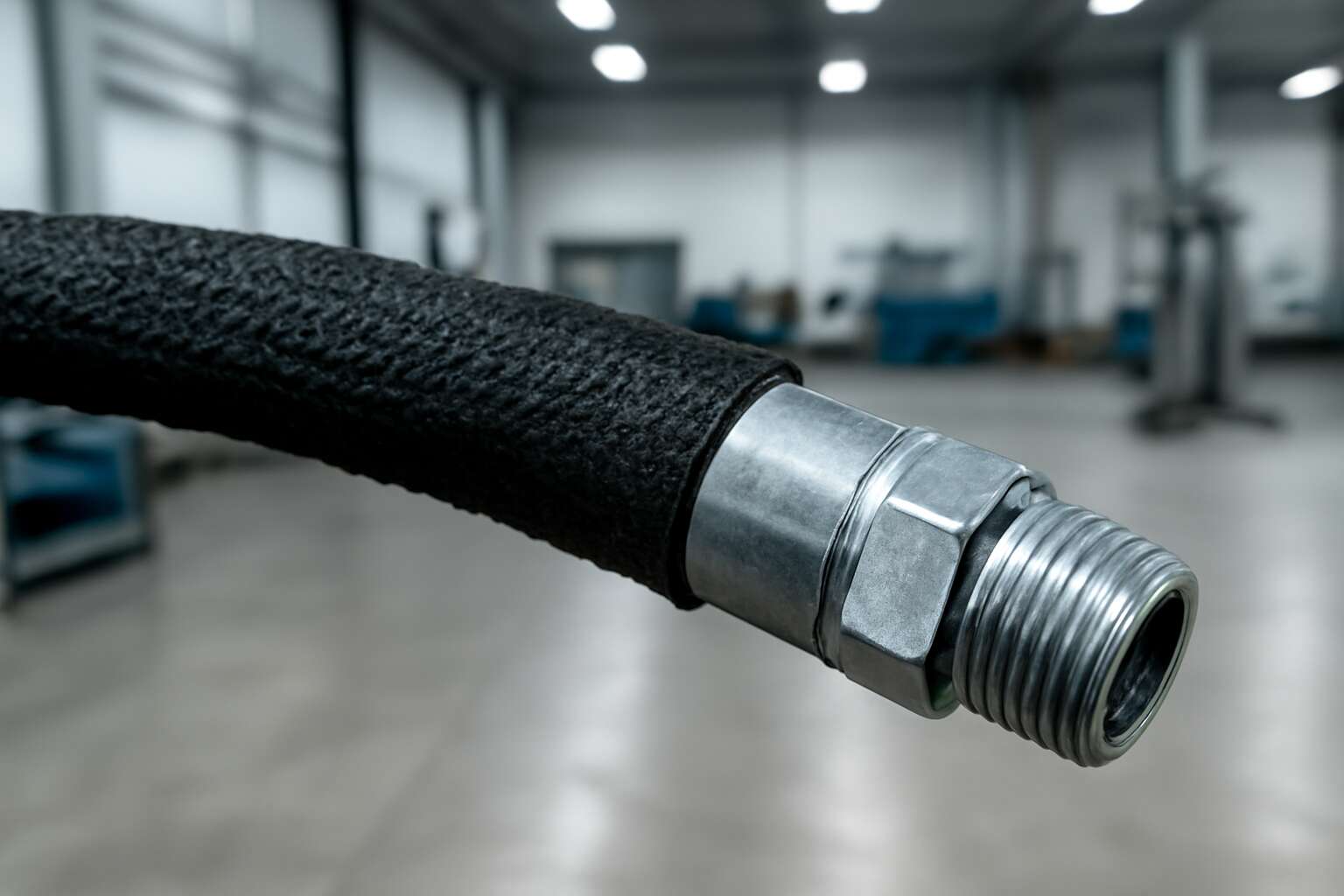
Understanding Abrasion Protection for Hydraulic Hoses
What is abrasion protection in hydraulic systems
In South Africa’s toughest workshops, a single abrasion failure can pause a production line longer than a power outage. “Protection is the difference between downtime and drive-on,” says a veteran SA foreman. Abrasion protection for hydraulic hoses isn’t flashy, but it is essential—quietly defending performance in hot sun and gritty dust.
At its core, abrasion protection means a barrier that absorbs friction and shields against scuffing where hoses bend and rub against metal. The hydraulic hose abrasion sleeve serves as that frontline guard, distributing stress along bends and mounting surfaces to keep hoses flexible and leak-free in mining, agriculture, and manufacturing environments.
- Extends hose life by guarding against wear
- Prevents pinholes and leaks at bends
- Resists dust, heat, and vibration for harsh settings
This approach boosts reliability across SA industries, reducing downtime and maintaining steady production.
Key properties of durable abrasion sleeves
In South Africa’s demanding workshops, uptime is a currency more valuable than gold. The hydraulic hose abrasion sleeve stands as a quiet sentry, absorbing friction where hoses bend and rub. A well-chosen sleeve shields against scuffing while preserving flexibility, so pressure stays steady and leaks stay away. It’s the sort of protection that doesn’t shout, but it delivers.
Key properties crest the horizon of durability: high abrasion resistance, heat tolerance under SA sun, chemical compatibility with hydraulic fluids, and a snug fit that stays in place around bends and mounts.
Consider these hallmark traits:
- Flexible reinforcement that spreads stress along curves
- Thermal stability across heat and vibration
- Simple, secure attachment with clamps
- Dust and chemical resistance for harsh environments
With the right hydraulic hose abrasion sleeve, productivity stays on track, even when dust swirls and heat blazes.
Common sleeve materials and their uses
In SA workshops, every minute of uptime is a stat that sings—and a single worn hydraulic hose can ruin a shift. Understanding abrasion protection for hydraulic hoses means recognizing how sleeves behave under heat, dust, and bend pressure. The hydraulic hose abrasion sleeve acts as a discreet shield, absorbing scuffing before it sears the line.
Common sleeve materials span the spectrum, each with a specific battle plan. Some sleeves blend layers to tailor protection for SA dust, sun, and heat.
- Neoprene for flexibility
- Aramid-reinforced fabrics for heat
- Polyester blends for abrasion
- PTFE-coated textiles for slickness
- Silicone for vibration and resilience
Choosing the right protection means weighing fit, attachment method, and environment, not just price. The right choice keeps hoses calm under pressure and rigs running smoothly through sandstorms of workshop life.
Installation considerations for protective sleeves
South Africa’s workshops run on grit and timing. In a busy plant, every minute of uptime is currency, and a single damaged hydraulic hose can derail a shift. Understanding abrasion protection for hydraulic hoses starts with how sleeves greet heat, dust, and bend pressure. The hydraulic hose abrasion sleeve acts as a discreet shield, absorbing scuffs before they sear the line and turn a routine job into a firefight.
Installation considerations for protective sleeves demand precision. They must fit cleanly, ride with the hose, and survive the harsh reality of a workshop climate. Consider these during mounting:
- Fit and flow: a sleeve that integrates with the hose, not constraining its movement
- Attachment philosophy: a secure grip that cushions rather than cuts into the line
- Route and environment: mind bend radius, heat sources, and dusty corners
- Surface preparation: a clean, dry mounting area helps sleeves settle in
Materials and Constructions for Hose Protection Sleeves
Friction-resistant fabrics and polymers
Across South Africa’s heavy industry, 65% of hydraulic failures trace to abrasion at bends, and the hydraulic hose abrasion sleeve stands at the crossroads of durability and flexibility. Forged from friction-tested fabrics and polymers, it promises longer life against heat, oil, and grit, turning rough duty into dependable motion.
Friction resistance arises from layered constructions: outer fabrics shed heat, inner laminates endure wear, and elastomer cushions absorb motion. Key materials include aramid fibers and UHMWPE, PTFE coatings, and silicone blends—together forming a shield that keeps contaminants out and lubricants in.
- Aramid fibers for high strength
- UHMWPE for abrasion resistance
- PTFE and silicone coatings for low friction
Constructions range from seamless sleeves to retrofitting splits, all tailored to hose diameter and bend radius. The result is a resilient hydraulic hose abrasion sleeve that endures, quietly guiding the system through its saga.
Sleeve constructions: single-layer vs multi-layer designs
Materials and constructions for hose protection sleeves reveal a quiet engineering art. A hydraulic hose abrasion sleeve blends toughness with flexible motion, using layered defenses to manage heat and wear. The impact is undeniable!
Sleeve constructions come in single-layer and multi-layer designs. The choice hinges on bend radius, exposure, and maintenance cycles.
- Single-layer: lighter, cost-effective, easier retrofits; suitable for moderate abrasion and tight bends.
- Multi-layer: combines aramid fibers with UHMWPE, PTFE coatings, and silicone blends for higher heat resistance and longer life.
- Note: Some hybrids add insulated laminates for oil resistance.
Either approach yields a resilient shield that keeps contaminants out and lubricants in, a small but crucial line of defense in South Africa’s heavy industry—the hydraulic hose abrasion sleeve at the heart of durable motion.
Durability vs flexibility: material trade-offs
Durability and flexibility duel within each fold of the sleeve. The hydraulic hose abrasion sleeve marries aramid fibers with UHMWPE, tempered by PTFE coatings and silicone blends to resist heat and wear. The result is a shield that remains supple through tight bends yet stubborn against the furnace of continuous operation. In South Africa’s heavy industry, this quiet art keeps lifeblood moving when pressure climbs and schedules tighten.
Trade-offs at a glance:
- Heat tolerance vs. pliability
- Abrasion life vs. weight and bulk
- Chemical resistance vs. cost
Ultimately, the material equations shape the hydraulic hose abrasion sleeve’s fate—where layered defenses meet the needs of daily motion. A compact front line, it guards against dust and oil while permitting the swing of steel and hydraulic breath, a silent guardian of durable motion in the sand-dusted heart of industry.
Fluid compatibility and chemical resistance
Every minute of downtime costs money in South Africa’s heavy industry. A layered approach defines materials and constructions for hose protection sleeves. A reliable hydraulic hose abrasion sleeve blends barrier polymers with reinforcing fibers to stand up to vibration, heat, and spray without turning brittle in the field. The goal is fluid compatibility that survives the harsh chemistry of industrial hydraulics while staying flexible enough to swing through tight bends!
Fluid compatibility and chemical resistance are not afterthoughts; they drive the sleeve’s chemistry. The outer shield resists mineral oils and solvents, while inner layers tolerate esters and biodegradable fluids used in South Africa’s workshops.
The design often uses a multi-layer stack: a fluoropolymer or PTFE-infused barrier, a glass or aramid reinforcement, and a silicone or fluorosilicone finish for long life in heat. This configuration preserves flexibility and protects against dust, oil, and chemical attack while preserving hydraulic breath and motion.
Applications and Industry Use Cases
Industrial machinery and manufacturing settings
South Africa’s factories know that downtime costs more than a moment—it costs momentum. In industrial machinery and manufacturing settings, a hydraulic hose abrasion sleeve acts as a quiet guardian, shielding hoses from wear as they flex, recoil, and endure heat and grit.
Across SA’s key industries, protection extends the life of hydraulic systems and keeps lines open for production. Practical use cases include:
- Mining and quarrying equipment such as conveyors and shovels
- Industrial automation lines and bulk-material conveyors
- Agricultural machinery and irrigation systems
By reducing surface wear and heat transfer, hydraulic hose abrasion sleeve helps maintenance teams keep plants running with fewer interruptions.
Construction, mining, and off-road equipment
Downtime costs SA factories up to 15% of annual output—and momentum is the first casualty. A hydraulic hose abrasion sleeve acts as a quiet guardian, shielding hoses from heat, grit, and constant flex as lines bend under load.
In construction, mining, and off-road equipment, rugged protection keeps essential hydration lines and control circuits from abrasive damage during dusty shifts, muddy climbs, and high-vibration cycles. The sleeve helps those machines run longer between service windows.
- Construction: excavators, loaders, cranes
- Mining: drills, haul trucks, conveyors
- Off-road: utility vehicles, graders
Across these sectors, the sleeve translates to fewer unplanned stops and steadier production lines. It’s resilience in action—protecting hoses so teams spend less time wrestling with wear and more time keeping goods moving.
Oil, gas, and energy sector environments
In oil, gas, and energy environments, a single hose fault can halt a project for days and drain budgets dry. A hydraulic hose abrasion sleeve acts as a quiet guardian, shielding lines from heat, grit, and the constant flex that comes with high-load operations.
Applications span offshore rigs, onshore refineries, and critical generation sites.
- Offshore platforms and rigs
- Onshore refineries and petrochemical plants
- Pipeline maintenance and power-generation facilities
In South Africa’s field operations, rugged environments demand reliable protection and minimal downtime. Beyond reducing unplanned stops, it translates to steadier throughput, safer environments, and longer service intervals for hydraulic systems in demanding climates.
Retrofits, replacements, and upgrade scenarios
In South Africa’s rugged field operations, a single hose fault can halt production for days and drain budgets. The hydraulic hose abrasion sleeve acts as a quiet guardian, smoothing the path of heat, grit, and relentless flex.
Retrofits, replacements, and upgrades are common maintenance choreography: engineers wrap or swap sleeves during planned downtime to extend line life without wholesale hose replacement. A hydraulic hose abrasion sleeve provides a shield that reduces wear at high-load joints and bend radii.
Common scenarios in SA include:
- Retrofits during scheduled downtime to fit a hydraulic hose abrasion sleeve over vulnerable hoses
- Replacements on aging lines to restore integrity in abrasive, high-flex zones
- Upgrades to multi-layer protection with specialized materials for longer service intervals
Installation, Maintenance, and Performance Tips
Sizing and fit for hydraulic hoses
Installation: A snug fit is half the battle. The hydraulic hose abrasion sleeve shines when edges stay smooth and joints align, minimizing stress and ensuring coverage beyond bends. A well-fitted sleeve keeps the system running with quiet, confident performance.
Maintenance: Regular checks beat downtime. Inspect for wear indicators, monitor heat signs, and wipe away grime. Replace if cracks or surface crazing appear, as neglect invites leaks and noisy operation.
Performance tips and sizing: Accurate measurements and bend considerations guide fit. The right sleeve accommodates movement without hindrance, delivering durable protection in demanding SA environments and adding a touch of restrained elegance to rugged machinery.
Installation best practices and tools
Installation sets the pace for durability. The hydraulic hose abrasion sleeve earns its keep when edges stay smooth and joints align, letting the system flex without snagging. Start with accurate sizing, clean surfaces, and a dry-fit check. Have these tools on hand:
- Tape measure or calipers
- Sharp scissors or a utility knife
- Marker for sizing
- Clamps or hose clamps
- Cable ties and protective gloves
Maintenance: A quick glance prevents downtime. Inspect for wear indicators, monitor heat buildup, and wipe away grime. Replace if cracks or surface crazing appears; neglect invites leaks and noisy operation.
Performance Tips and Sizing: Accurate measurements and bend considerations guide fit. The sleeve should move with the hose, not hinder it; check for smooth transitions at brackets and fittings. In demanding South African environments, select a sleeve with UV and dust resistance, and a prudent safety margin to maintain long-term performance.
Inspection, wear indicators, and replacement timing
In SA workshops, the installation stage for a hydraulic hose abrasion sleeve is where durability begins. Size the sleeve to the hose, keep edges smooth, and ensure joints align so the system can flex without snagging.
Maintenance is a quick glance that saves downtime. Inspect for wear indicators, monitor heat buildup, and wipe away grime. Replace if cracks or crazing appears; neglect invites leaks and noise.
- Cracks or crazing
- Excessive heat buildup
- Visible edge wear
Performance tips keep the sleeve moving with the hose. Check transitions at brackets and fittings, and choose a UV-dust resistant sleeve for SA conditions, with a safety margin for long-term performance. The hydraulic hose abrasion sleeve should be replaced at the first sign of fatigue.
Maintenance schedules and record-keeping
Downtime costs money, and in SA workshops every minute counts. The installation stage is where durability begins for a hydraulic hose abrasion sleeve. Size the sleeve to the hose, keep edges smooth, and ensure joints align so the system can flex without snagging.
Maintenance is a quick glance that saves downtime. Maintenance schedules and record-keeping matter: inspect for wear indicators, monitor heat buildup, and wipe away grime. Replace if cracks or crazing appears; neglect invites leaks and noise.
- Installation date
- Hose size and type
- Sleeve batch or lot
- Next inspection due
- Observed wear signs
Performance tips keep the hydraulic hose abrasion sleeve moving with the hose. Check transitions at brackets and fittings, and choose a UV-dust resistant sleeve for SA conditions, with a safety margin for long-term performance. Replace at the first sign of fatigue.
Standards, Testing, and Quality Assurance
Industry standards and certifications (SAE, ISO)
Protection that lasts isn’t luck—it’s standards-driven engineering. For a hydraulic hose abrasion sleeve, meeting recognized benchmarks means longer life and fewer surprises on the shop floor. In South Africa’s rugged industrial landscape, compliant protection translates to real uptime and lower maintenance costs. When you see a sleeve that wears well, you’re seeing a quiet victory for quality systems.
Key standards and certifications to watch include:
- SAE standards for hydraulic hose assemblies
- ISO standards governing product performance and quality management
- SABS certification and the South Africa safety mark
At our facilities, ISO 9001 quality management underpins every batch. We rely on rigorous testing—Taber abrasion resistance, flex-life, and environmental aging—to prove performance. The sleeve is traceable, tested, and ready for South Africa’s demanding environments.
Abrasion resistance testing methods
Protection that lasts isn’t luck—it’s standards-driven engineering. In South Africa’s rugged industrial landscape, unplanned downtime can shave a fifth of annual output, and the cost isn’t just money—it’s momentum lost on the shop floor. The lesson is stark: reliability is engineered, not hoped for.
Standards guide every bend, twist, and rub endured by a hydraulic hose abrasion sleeve. Our testing regime applies controlled wear cycles, trackable service-life progress, and environmental aging emulations to prove performance without surprises when real grit arrives. That’s where standards shine!
- Wear progression under bending and vibration
- Core fabric and seam resilience after simulated service hours
- Traceable QA data and environmental aging records
Supplier selection and traceability
Reliability isn’t luck; it is a ledger of proof. Standards are the compass guiding every bend in a hydraulic hose abrasion sleeve. In South Africa’s demanding workshops, reputation is earned in quiet hours of testing, not the sudden moment of failure. Design and validation walk hand in hand.
Testing unfolds like clockwork: controlled wear cycles, cumulative service hours, and aging emulations. You track progress, verify fabric and seam resilience, and audit data trails for every sample. When grit arrives, the sleeve performs because the numbers back the promise.
- Rigorous supplier qualification and on-site audits
- Complete lot traceability and material certificates
- Documented QA processes and non-conformance handling
Quality Assurance and supplier selection hinge on traceability. Seek partners with complete lot certificates, transparent QA records, and ready defect-resolution history. For our sleeve, traceability isn’t vanity—it’s uptime.
Life-cycle planning, warranties, and ROI
In South Africa’s rugged workshops, uptime is the real currency. Data from scattered plants puts downtime costs at up to 28% of weekly output, a number too stubborn to ignore. The hydraulic hose abrasion sleeve stands on that bedrock—engineered and validated through rigorous testing to endure the grind from workshop floor to engine bay.
Standards shape the life-cycle plan, from material choice to field validation. Warranties back long-term performance and give maintenance teams clear expectations. When data trails are transparent, ROI becomes a language: fewer failures, extended service hours, and smoother scheduling across harsh South African environments.
Quality assurance feeds into every purchase, turning estimates into confirmable outcomes. By documenting wear, service hours, and returns, your team turns risk into measurable value—and the corporate ledger knows the truth of uptime.



0 Comments