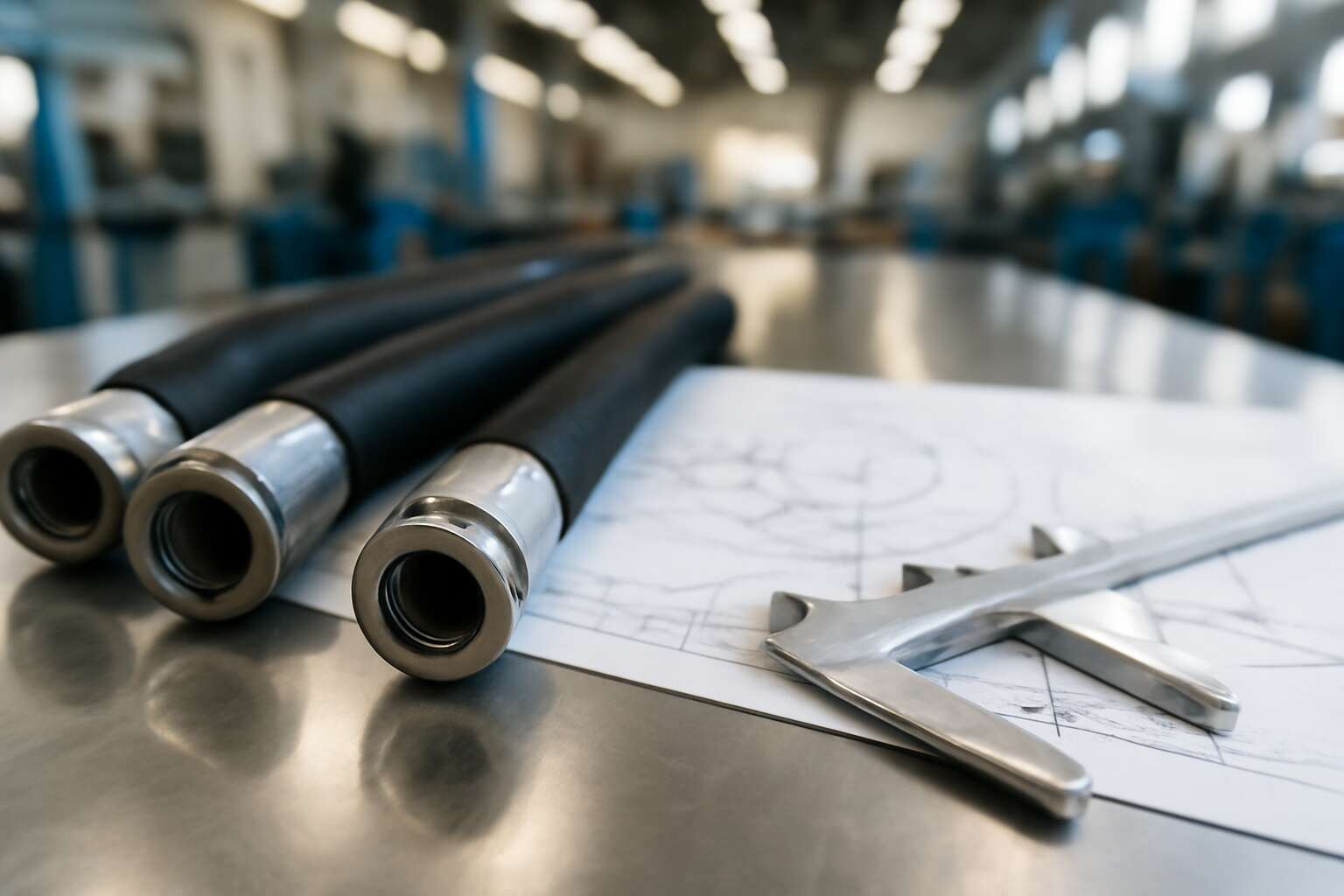
Understanding Hose Blanks in Hydraulic Systems
Definition and Role in Hydraulic Circuits
Across South Africa’s industrial floors, downtime is the enemy of productivity. A single, well-chosen component can keep a line humming; a misfit can derail it. Hydraulic hose blanks are the unglamorous workhorses behind every reliable circuit. These standard-length segments become the blueprint for tailored assemblies, shaping routing, flare compatibility, and how pressure is contained—like a well-tailored suit for industrial life.
In circuits, their role is practical and precise: they provide raw material that is cut and fitted to the machine’s exact path. They support testing and offer flexibility for future expansion, ensuring steady performance under variable loads. To choose hose blanks effectively, consider:
- Precise length for clean routing
- Fittings compatibility with ports and adapters
- Material and pressure rating matching the fluid and duty
On a South African shop floor, attention to detail translates into reliability and fewer surprises on maintenance.
Material Options and Configurations
Uptime is a currency on South African shop floors, and a single, well-chosen part can keep a line humming. Industry data suggests up to 30% of hydraulic failures begin with the hose, a reminder of the quiet power of hydraulic hose blanks that feed every circuit.
Material options for hydraulic hose blanks span nitrile-based NBR for general duty to FKM for high temperatures, with HNBR offering aging resistance. Polyurethane delivers abrasion resistance for lighter tasks. The fluid, temperature, and duty cycle guide the choice.
- Standard lengths or precise cuts for routing
- Reinforcement aligned with pressure and bend radii
- End-form readiness for fittings
Configurations matter: length, ID, wall thickness, and fittings compatibility. The hydraulic hose blanks may be standard or cut to route precisely, with end-form readiness for fittings.
On the shop floor, these details translate into predictable maintenance and fewer surprises.
Manufacturing Standards and Certifications
Uptime on South Africa’s shop floors is currency, and a single choice about hydraulic hose blanks can keep a line humming. Industry data shows up to 30% of hydraulic failures begin with the hose, a reminder that blanks carry real pressure. Understanding Hose Blanks in Hydraulic Systems underscores their impact on uptime.
Manufacturing standards and certifications stitch reliability into every length, diameter, and end-form.
- ISO 9001-based quality management ensures consistent production
- Material certifications and batch records enable full traceability
- Independent testing and SABS-aligned assessments verify performance
In South Africa, alignment with ISO 9001 and local SABS guidelines reassure buyers that hydraulic hose blanks meet stringent safety and durability expectations.
End Connections and Fitting Considerations
In the hum of a South African workshop, end connections write the uptime story with quiet force. A recent industry survey shows nearly 25% of hydraulic faults originate at the fitting interface, where a single misfit can cost hours of production. Understanding hydraulic hose blanks as more than placeholders reveals how end connections shape performance, pressure retention, and service life. The right pairing respects the blank’s size, end-form, and seating surface, aligning with the system’s flow and environment.
- Thread standard and size
- End-form compatibility
- Seal material and seating surface
Choosing end connections demands attentiveness to standards, size, and material. Sealing surfaces must complement the blank’s end-form; threads and seating should resist galling and cross-threading; and the assembly must harmonize with temperature and media. With careful orchestration, these components become the quiet backbone of uptime.
Customization and Compatibility for Hydraulic Line Blanks
Material Options and Thermal Resistance
Uptime on South Africa’s farms and workshops is the lifeblood of daily work. These hydraulic hose blanks are tuned for the rugged realities of veld and workshop alike, where reliability matters more than flash. Customization and compatibility are the quiet engines behind a steady, safe hydraulic circuit.
Customization means tailoring size, seal geometry, and connection options to suit the exact line and environment—whether it’s orchard irrigation, mining hydraulics, or industrial conveyors. Material options and thermal resistance are chosen to withstand SA heat and chilly mornings; the right blend maintains flexibility and resists swelling, even when fluids differ.
- Fluid compatibility and seal integrity for the pumped media
- Temperature and pressure tolerance across seasonal swings
- Geometric fit with standard fittings and hose sizes
Across SA, a well-made blank is a partner in reliability, reducing downtime and protecting livelihoods. Good customization and compatibility turn simple components into dependable workhorses under the sun.
End Connection Compatibility and Standards
Customization is the quiet engine behind a resilient hydraulic circuit. For South Africa’s veld and workshops, the right seal geometry and connection options—engineered into hydraulic hose blanks—mean uptime you can count on.
End connection compatibility and standards define the tactile feel of a system’s reliability. The blanks must align with standard fittings and the prevailing SA standards, staying true to safety and performance across seasonal swings.
- End connection compatibility with standard SA fittings
- Geometric fit to common hose sizes
- Compliance with industry standards and certifications
Where geometry, materials, and tolerances converge, customization unlocks seamless interchange across brands and lines, reducing the risk of cross-compatibility issues and limiting downtime when service calls come at the busiest hours.
Sizing, Tolerances, and Specification Compliance
Uptime in a South African workshop hinges on precision; a whisper of deviation can turn a planned service into a scavenger hunt. Customization is the quiet engine behind a resilient hydraulic circuit, and hydraulic hose blanks are engineered to pair with SA-standard fittings and common hose geometries. When geometry, materials, and tolerances converge, seamless interchange becomes routine, not a gamble.
- Sizing compatibility with SA standard fittings and common hose diameters
- Tight tolerances that preserve cross-brand interchange and reduce misfits
- Specification compliance across relevant SA regulations and industry certifications
That alignment translates to less downtime, more uptime, and a smoother workflow through the peak season, whether in a dusty veld or a busy workshop.
Finish Options and Surface Treatments
Customization and compatibility are the quiet engines of reliability when it comes to hydraulic hose blanks in South Africa. By aligning finish options and surface treatments with SA-standard fittings and common hose diameters, you reduce misfits and downtime. Customization here means choosing coatings that endure dust, heat, and frequent handling, while preserving the tactile feel of the assembly process. In short, the right finish makes the difference between a one-off repair and a long, smooth service cycle—trust me, your toolbox will thank you.
- Powder-coated protective finishes for rugged environments
- Anodized or satin coatings to resist corrosion
- Chemical-resistant top coats for solvents and fuels
- Low-friction inner surfaces to extend seal life
Ultimately, the spectrum of finishes gives technicians control over performance and uptime, turning potential wear into predictable service life in SA workshops.
Industrial Applications and Industry Use Cases
Construction, Agriculture, and Mobile Equipment
On South Africa’s rugged job sites, downtime whispers through the gears; up to a quarter of industrial setbacks begin with a hose. Hydraulic hose blanks are the quiet backbone, offering tailored lengths and ready fittings that defy dust and heat.
Construction machinery—from excavators to cranes—dreads field repairs. They provide exact diameters and bend radii, shrinking swap times and keeping production on track. Key strengths in this arena:
- Precise lengths
- Durable ends
- Thermal resilience
Agriculture: In farms and irrigation, hoses endure dust, sun, and cycles of dawn heat. Hydraulic hose blanks tolerate expansion and pressure shifts, sustaining steady flow and reliable performance under long hours in the field.
Mobile fleets—trucks, service vans, and plant trailers—rely on ready-to-fit hoses. These solutions streamline maintenance, enabling quick swaps and dependable operation across South Africa’s roads and mines.
Industrial Machinery and Manufacturing Environments
Across South Africa’s bustling manufacturing hubs, hydraulic hose blanks quietly underpin every strenuous cycle. When presses roar and robotic arms align, these blanks become unsung heroes—tailored lengths, exact fittings, and unwavering seals that shrug off heat and dust.
Industrial machinery and manufacturing environments demand components that endure the tempo of the line. In practical terms, hydraulic hose blanks empower:
- Assembly lines and robotic cells requiring precise feed-throughs
- Mining transport and processing gear where rugged endurance matters
- Material handling and packaging systems that hinge on dependable fluid transfer
From the factory floor to the field, these blanks stitch reliability into South Africa’s industrial tapestry. Hydraulic hose blanks translate raw power into steady motion, cutting downtime and extending the life of critical systems.
Energy, Oil & Gas, and Power Transmission
A plant manager once quipped, “Reliability is the most affordable upgrade you can make.” In South Africa’s energy corridors and power networks, that wisdom rings especially true. Hydraulic hose blanks ensure length-specific, seal-tight conduits that shrug off heat, dust, and the tremors of heavy industry.
For energy, oil & gas, and power transmission, the practical impact is measurable:
- Energy and power generation: robust fluid transfer in turbine cooling and lubrication circuits
- Oil and gas: offshore and onshore hose assemblies that withstand extreme pressures and harsh environments
- Industrial transmission: leak-tight lines for drive systems, conveyors, and crane machinery
Across the field and the factory, hydraulic hose blanks translate raw power into steady motion, weaving resilience into monumental projects and routine operations alike.
Aerospace and Niche Applications
In South Africa’s aerospace hubs and niche industries, the right hydraulic hose blanks matter more than you think. “Reliability is the engine that never sleeps,” a plant manager once noted, and it holds true on the runway and in the workshop. These components translate high energy into controlled motion, delivering predictable performance in demanding environments.
Industrial applications and industry use cases span aerospace and niche sectors where precision, resilience, and sealed lines matter:
- Aerospace ground-support equipment and test rigs that demand leak-tight, heat-resistant runs
- Marine and offshore maneuvering gear with compact, length-specific hoses
- Wind-turbine maintenance hoists and winches requiring robust hydraulic hose blanks
- Industrial automations and test benches in niche manufacturing
From my perspective, the pattern is clear: in every SA project, those blanks guard uptime and safety, weaving reliability into complex systems.
Quality Assurance, Standards, and Testing Protocols
Industry Standards and Certification Bodies
Quality Assurance, Standards, and Testing Protocols anchor every batch of hydraulic hose blanks. In South Africa, adherence to SABS standards and ISO benchmarks ensures safety and performance. Rigorous hydrostatic and leakage testing exposes hidden flaws before deployment, protecting operators and critical systems from unexpected failures!
- Hydrostatic pressure testing to specified burst limits
- Leakage and contour integrity checks
- Material traceability and certification
Industry standards are upheld by certification bodies and independent labs that verify testing protocols, calibration, and documentation for these hose components. SABS audits align local production with international reliability, ensuring consistent performance across demanding South African environments.
Testing Methods: NDT, Pressure, and Burst Tests
In the quiet furnace of South Africa’s workshops, one statistic cuts through the night: 40% fewer field failures when hydrostatic verification accompanies every batch of hydraulic hose blanks. QA is not a ritual but a living shield, ensuring each blank leaves the line with a history of safety and performance.
Quality Assurance, Standards, and Testing Protocols shape reliability. The triad of testing—NDT, pressure, and burst tests—peers into the unknown so flaws cannot hide.
- Non-destructive testing (NDT) detects cracks, inclusions, and subsurface flaws without harming the blank
- Pressure tests verify seal integrity and functional performance under service loads
- Burst tests push toward the edge to confirm construction margin and safety factor
Material traceability and certification bind every hydraulic hose blank to SABS and ISO benchmarks, ensuring consistent performance in demanding South African environments. Certification bodies audit testing protocols, calibration, and documentation, turning hidden weaknesses into visible truths and protecting operators and critical systems.
Inspection, Documentation, and Traceability
In the quiet hum of a rural workshop, one stat breaks the silence: 40% fewer field failures when hydrostatic verification accompanies every batch of hydraulic hose blanks. That number isn’t a slogan—it’s a promise that QA is a living shield, not a ritual.
Quality Assurance, Standards, and Testing Protocols map reliability with careful inspection, thorough documentation, and iron-clad traceability. Each batch travels a traceable path: incoming material checks, in-process verifications, final hydrostatic tests, and complete batch records that auditors and operators can follow with confidence.
- Inspection upon receipt and material verification
- In-process quality checks aligned to standards
- Final hydrostatic verification for sealing and performance
- Comprehensive batch documentation and traceability codes
Certification bodies audit calibration, testing results, and control records, turning hidden weaknesses into visible truths. The outcome is steady performance for South African environments and the operators who rely on these components every day.
Supplier Qualification and Auditing
Forty percent fewer field failures isn’t a slogan—it’s a live result when quality assurance meets hydraulic hose blanks! In a market where reliability saves downtime, QA acts as a steady shield for critical systems.
Quality Assurance, Standards, and Testing Protocols shape a predictable, auditable supply chain. Supplier qualification and auditing ensure every partner meets shared standards before any batch enters production. With clear criteria for material delivery, process controls, and risk assessment, you build confidence that components arriving onsite will perform.
- Independent supplier qualification and auditing framework
- Documentation alignment with quality management systems
- Defined acceptance criteria and supplier performance reviews
In South Africa, regulators and OEMs expect robust supplier qualification and auditing as standard practice.




0 Comments