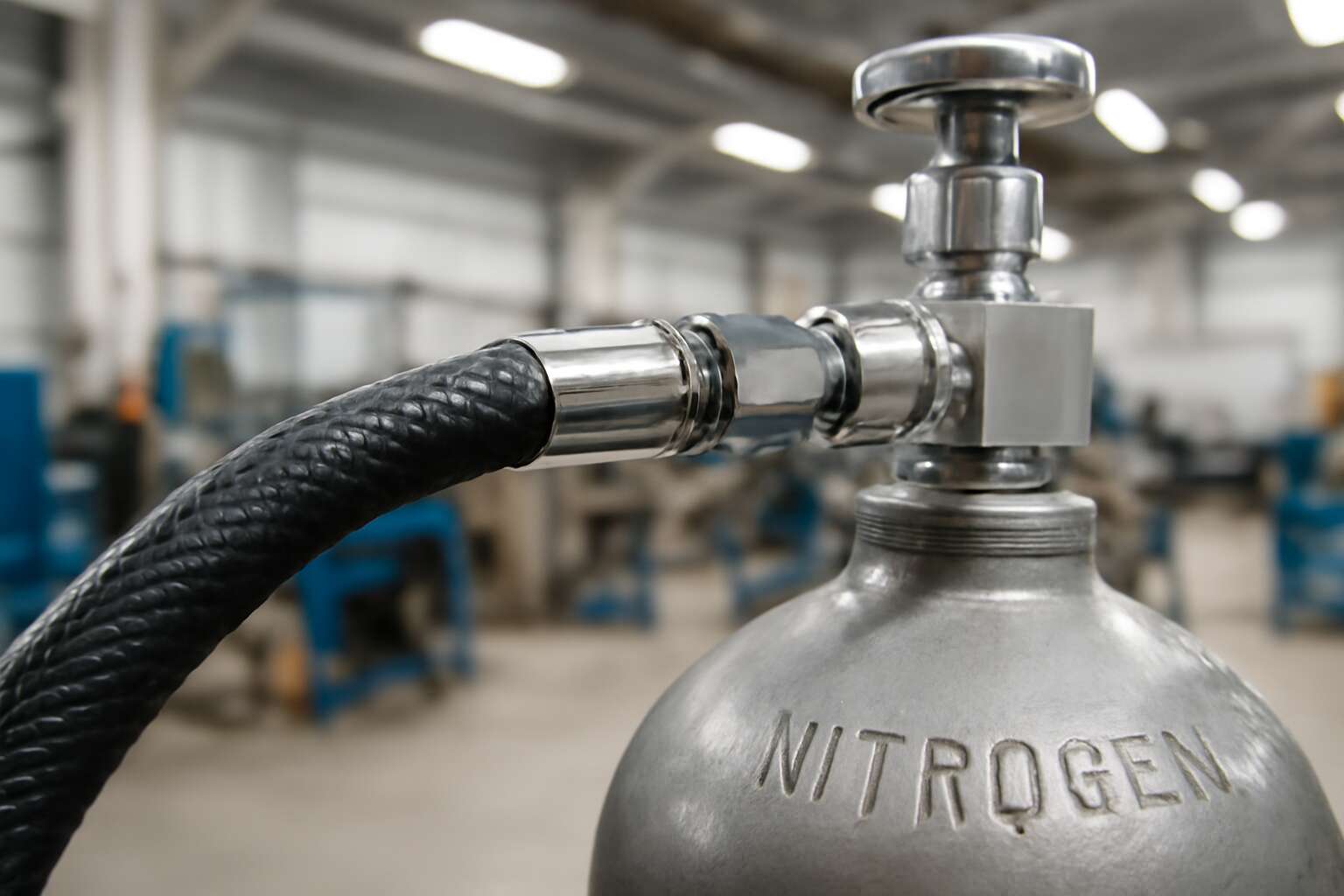
Understanding hydraulic hose materials and nitrogen compatibility
Hydraulic hose materials overview
In South Africa’s bustling workshops, the hose that ferries nitrogen is more than a conduit—it’s a quiet guarantor of safety. “The right hose is the quiet guardian of a safe nitrogen line,” a veteran technician likes to say. Materials matter, because nitrogen compatibility hinges on more than pressure.
Understanding hydraulic hose materials means reading elastomer and lining choices. For nitrogen, nitrile (NBR), EPDM, PTFE, and PU constructions are common, favored for low permeability and inertness.
- Nitrile (NBR) elastomer
- PTFE-lined or PTFE constructions
There is no universal answer; can hydraulic hose be used for nitrogen, the answer rests on the hose’s material, rating, and manufacturer guidance. Compatibility arises from how the construction tolerates inert gas and temperature, not from guesswork alone.
Nitrogen properties and system compatibility
In South Africa’s dimly lit workshops, a nitrogen line can be the difference between efficiency and quiet catastrophe. The question lingers: can hydraulic hose be used for nitrogen? The answer rides on the hose’s material, rating, and the manufacturer’s guidance, not on guesswork.
Nitrogen is a cold, inert traveler—unreactive, sneaking through the night, yet unforgiving to misfit materials. Permeation, temperature swings, and purity levels all conspire to test a hose’s lining and elastomer. The choice must harmonize with the system’s temperature, pressure, and the gas’s dryness; otherwise, you invite leaks and embers hidden in the lines.
- Material and lining compatibility with inert gas
- Temperature and pressure ratings matching the nitrogen system
- Manufacturer guidance and system-specific approvals
There is no universal answer; verification with the hose maker’s data is essential, ensuring the assembly respects both the letter and the spirit of safe nitrogen transport.
Elastomer interactions with nitrogen
A surprising 63% of nitrogen system leaks in South African workshops trace back to hose material mismatch, a statistic that keeps procurement teams honest. The question hovers in the workshop like a shade: can hydraulic hose be used for nitrogen?
Elastomer interactions with nitrogen hinge on permeation rates, temperature swings, and dryness. The lining must resist nitrogen’s diffusion without swelling, cold embrittlement, or loss of elasticity. A misfit elastomer behaves like a charming but unreliable ally, leaking quietly when you need it most.
- Material compatibility with inert gas
- Temperature and pressure ratings
- Manufacturer guidance and system-specific approvals
There is no universal answer; verification with the hose maker’s data is essential, ensuring the assembly respects both the letter and the spirit of safe nitrogen transport. In South Africa’s workshops, that diligence is part superstition and part procedure.
Common misconceptions about nitrogen in hose systems
In South Africa, nitrogen leaks in workshops are rarely due to sloppy hoses; more often it’s a mismatched hose material—63% of cases, to be exact.
Can hydraulic hose be used for nitrogen? The question: can hydraulic hose be used for nitrogen? The answer isn’t universal; it hinges on the elastomer, the liner, and the ratings. Always verify with the hose maker’s data and system approvals before assuming a green light.
- Nitrogen is so inert it never diffuses through hose walls.
- A hydraulic hose chosen for air is automatically nitrogen-safe.
- Temperature and pressure don’t affect nitrogen behavior in hoses.
The true narrative favour a conservative, data-driven approach over guesswork.
Pressure, safety, and performance considerations for nitrogen service
Nitrogen pressure ratings and hose selection
Pressure in nitrogen lines is no joke, and the hose must survive it. it’s not the gas that misbehaves—it’s the hose. can hydraulic hose be used for nitrogen? It can, if the hose has a gas-rated construction and a comfortable safety margin above system pressure. In SA, verify compliance with local safety guidelines and proper gas-service labeling.
Safety goes beyond a stamp. Nitrogen leaks in confined spaces are real hazards, and the engineering approach matters—proper seals, clean regulators, and oil-free gas paths align with best practice. Gas-rated fittings and adherence to local standards help keep nitrogen service compliant in SA facilities.
Performance hinges on purity and temperature. For nitrogen, select hoses with low permeability and reinforcement suited to run length and flexing, then route them to minimize pressure drop. Local SA suppliers can guide selection toward reliable, compliant options.
Compatibility of hose reinforcement with nitrogen
Pressure in nitrogen lines is unforgiving, and the hose is the hinge on the door of safety. When asking can hydraulic hose be used for nitrogen, the answer rests on gas-rated construction and a generous safety margin above system pressure. In SA, compliance with local safety guidelines and clear gas-service labeling isn’t optional—it’s the first line of defense against leaks and accidents.
Safety goes beyond a stamp. Nitrogen leaks in confined spaces bite hard, and the engineering approach matters—proper seals, clean regulators, and oil-free gas paths align with best practice. Performance considerations include maintaining nitrogen purity and controlling temperature along the run. Gas-rated fittings and adherence to local standards help keep nitrogen service compliant in SA facilities.
- Reinforcement matched to nitrogen pulses and duty cycle
- Low permeability materials and optimized sealing
- Gas-service labeling and compliant fittings
Safety protocols for nitrogen gas handling and leaks
“Safety is only as strong as the last connection!” a punchy reminder that nitrogen systems demand flawless seals. Pressure in nitrogen lines can surge with quiet urgency, making the hose the hinge on safety’s door. can hydraulic hose be used for nitrogen? The answer hinges on gas-rated construction, a generous safety margin above system pressure, and SA compliance with local safety guidelines and clear gas-service labeling.
For nitrogen service, performance rests on maintaining purity, stabilizing temperature along the run, and using gas-rated fittings that meet local standards. Safety protocols emphasize clean regulators, oil-free gas paths, and thorough leak testing in well-ventilated spaces.
- Leak detection in confined spaces with proper ventilation
- Clear gas-service labeling and compliant fittings
In SA facilities, these practices curb surprises and keep nitrogen service predictable.
Performance metrics: flow, flexibility, and temperature limits
Pressure is the stubborn truth in nitrogen work. A hairline seal flaw can escalate fast, turning a quiet line into a safety risk. People ask, can hydraulic hose be used for nitrogen? The answer hinges on gas-rated construction, a generous margin above system pressure, and compliance with local gas-service labeling.
Pressure, safety, and performance converge in three metrics that matter: flow stability, flexibility, and temperature limits.
- Flow stability under nitrogen pressure to prevent surges.
- Flexibility and bend radius for long runs without kinking.
- Temperature tolerance that preserves purity and seal integrity.
In South Africa, clear gas-service labeling and well-ventilated leak testing are standard practice, helping keep nitrogen service predictable while upholding local safety guidelines.
How to select hoses for nitrogen applications
Key construction features to look for
South Africa’s industrial spaces treat nitrogen purity as non-negotiable—one compromised line can halt production and drain profits. So, can hydraulic hose be used for nitrogen? The answer hinges on construction and how well the hose handles nitrogen’s demanding environment.
Look for these construction features that directly influence nitrogen reliability in real-world SA duties:
- Low-permeation inner tube to minimize nitrogen diffusion
- Reinforcement rated for the system’s pressure and vibration
- Broad temperature tolerance to cover coastal and inland swings
- Leak-free fittings with proven compatibility for nitrogen service
In South Africa, coastal or inland conditions demand coatings and fittings that resist corrosion. Choose reputable suppliers with documented nitrogen compatibility and traceable test data to safeguard your system’s integrity and uptime.
Temperature and pressure guidelines for nitrogen
South Africa’s high-stakes industrial tempo demands clarity: the question ‘can hydraulic hose be used for nitrogen’ is more than curiosity. It’s a practical question where construction meets performance. The answer hinges on how well a hose handles nitrogen’s exacting environment and the system’s heartbeat: pressure, temperature, and purity.
When choosing hoses, engineers weigh ratings, resilience, and nitrogen’s temperamental moods—the low temperatures, potential condensation, and the pressure spectrum that threads through SA coastal and inland duties. The temperature and pressure guidelines for nitrogen emerge from the hose’s spec sheet, telling a story of endurance and compatibility.
Trustworthy suppliers will provide nitrogen compatibility data and traceable test records, letting you safeguard your integrity and uptime. With the right choice, your nitrogen lines stay steadfast, precise, and ready to perform under pressure.
Matching fittings and adaptors for nitrogen systems
Every hour of plant downtime costs SA manufacturers thousands, especially when nitrogen systems misfire. The guiding question can hydraulic hose be used for nitrogen shapes every choice a designer makes—from material to fitment and beyond.
Selecting hoses for nitrogen starts with matching expectations to service: pressure, purity, and cold checks. That begs the question can hydraulic hose be used for nitrogen, and the answer hinges on compatibility. Prioritize hose assemblies with compatible fittings and adaptable adaptors. Think about thread types, seals, and the path of least permeation; spiraled reinforcement can endure shocks and keep purity intact.
- Confirm nitrogen compatibility data from the supplier and traceable test reports
- Align thread standards (NPT, BSP, metric) and pressure ratings with your system
- Choose seals and liners with low permeability (PTFE, stainless) for high purity
- Ensure purge ports and cleanliness protocols are built into the hose assembly
With the right partner, your nitrogen lines stay steadfast, precise, and ready to perform under pressure.
Certifications and industry standards for nitrogen service
Across South African factories, every hour of downtime costs thousands as nitrogen lines misfire under pressure. can hydraulic hose be used for nitrogen? The answer isn’t a blunt yes or no—it hinges on proven compatibility, material integrity, and dependable fittings that keep purity intact when the system is asked to perform.
Certifications and industry standards matter when selecting hoses for nitrogen. Look for ISO 8573-1 purity classifications, ISO 9001 quality management, and SA-based SABS conformity for gas systems. Fittings should match ISO/EN/DIN interfaces; choose liners and seals with low permeability to protect purity.
- ISO 8573-1 purity classifications
- ISO 9001 quality management
- SABS conformity for gas system components
In practice, a supplier who can provide traceable test reports and material certificates helps keep nitrogen service steady under demanding conditions in SA.
Lifecycle, maintenance, and inspection practices
In SA plants, a single nitrogen line misfire can halt production for hours and cost thousands. Can hydraulic hose be used for nitrogen? The question isn’t a simple yes; it rests on lifecycle governance, material integrity, and dependable fittings that preserve purity when push comes to the test.
Lifecycle begins with supplier traceability; hoses must be chosen with predictable service life, compatible elastomers, and reinforced structures suited to nitrogen’s low permeability and pressure. Fittings and interfaces should match ISO/EN/DIN standards; expect test reports and certificates that confirm material suitability.
Maintenance and inspection involve record-keeping and visible checks for wear, chemical attack, and leaks; environment in SA factories (dust, heat) influences degradation. Regular audits and non-destructive evaluation help ensure nitrogen service remains steady under demanding conditions, supported by a disciplined approach to purity and performance.
Industry use cases and practical examples
Hydraulic testing and nitrogen inflation in manufacturing
Nitrogen is the quiet backbone of controlled atmospheres, shaping outcomes more than most managers admit. The nagging question—can hydraulic hose be used for nitrogen—haunts factory corners where precision is non-negotiable and safety margins are measured in parts per million.
Industry use cases and practical examples reveal a spectrum: hydraulic testing of components, nitrogen inflation for seals and diaphragms, and inerting during assembly to prevent moisture and oxidation.
- Purging and blanketing lines in metal fabrication
- Pneumatic actuation testing in automotive assemblies
- Diaphragm and gasket verification in packaging equipment
These applications favor hoses that resist nitrogen embrittlement, maintain flexibility, and stay rated within the right pressure bands—an alignment that minimizes surprises when the gas pours through the system.
On the South African shop floor, the blend of nitrogen use and hose construction shapes project timelines and quality benchmarks, pushing engineers to weigh materials, fittings, and safety considerations with a rare seriousness.
Pneumatic vs hydraulic nitrogen applications across industries
Nitrogen’s quiet efficiency travels far beyond paint booths and valve rooms. A seasoned engineer once quipped, “can hydraulic hose be used for nitrogen”—a question that signals a reality on every modern line: nitrogen moves with purpose, and so must the hose that carries it. Across industries, pneumatic and hydraulic nitrogen applications diverge in pace and tolerance: pneumatics deliver rapid cycles, while hydraulics offer steadier pressure for sealed tests and leak checks.
Three pragmatic scenarios:
- Gas blanketing during electronics assembly to deter moisture and corrosion
- Diaphragm inflation in packaging lines for consistent seals
- Nitrogen purge strategies in food and pharmaceutical lines to slow oxidation without solvent risk
On the South African shop floor, the choice hinges on hose construction that resists embrittlement, stays flexible, and keeps pace with nitrogen’s exacting demands—fittings, safety culture, and a shared language between procurement and engineering.
Automotive and aerospace case studies
Across automotive and aerospace, nitrogen acts as a quiet stabilizer—purging, blanketing, and sealing with unspoken precision. In South Africa’s plants, nitrogen strategies cut oxidation defects by up to 40%, a statistic that turns curiosity into clear action. A quick look at “can hydraulic hose be used for nitrogen” reveals that only hoses resisting embrittlement and temperature swings will do. On South Africa’s shop floors, these lines must balance flexibility with reliability and pace, safeguarding sensitive materials from oxidation and moisture.
- Automotive: nitrogen purge in electronics and sealant lines during assembly to deter moisture ingress
- Aerospace: inert nitrogen sweep in composites curing and leak-testing to preserve adhesive integrity
Offshore, marine, and heavy equipment scenarios
Across South Africa’s offshore yards, nitrogen strategies have cut oxidation defects by up to 40%, turning fragile assemblies into durable allies. In this quiet safety net, purge, blanketing, and sealing operate with unspoken precision—like quiet tides guarding a moonlit hull. So, can hydraulic hose be used for nitrogen? The answer hinges on resilience—hose that resists embrittlement and temperature swings is essential for sea-wind decks and tropical sun.
Industry use cases span offshore platforms, marine ballast and purge sequences, and heavy equipment maintenance cycles. Purges in control lines keep moisture at bay, blanketing protects critical fluids, and inert gas storage helps prevent corrosion on hydraulic components.
These environments demand hoses that balance flexibility with reliable nitrogen compatibility, delivering steady performance under South Africa’s conditions.
Troubleshooting, FAQs, and buying guidance
Signs of incompatibility or degradation with nitrogen
Tap into the quiet power of nitrogen lines, and you’ll see why hose choice matters. In South Africa, about one in six nitrogen-system incidents trace to incompatible hose. When trouble hits, watch for stiffness, swelling, leaks at connections, or braid discoloration. The answer hinges on compatibility and rating—can hydraulic hose be used for nitrogen.
FAQs: can hydraulic hose be used for nitrogen? Short answer: only if the hose is explicitly rated for nitrogen service and compatible with the system’s pressure.
- Signs of incompatibility or degradation with nitrogen: swelling, cracking, hardening.
- Common questions: does the hose meet nitrogen certifications and temperature ranges?
- Buying considerations: look for explicit nitrogen labeling on datasheets.
For South African buyers, seek nitrogen-compatible labeling, suitable reinforcement, and standards compliance (SABS/ISO). If in doubt, consult the manufacturer’s nitrogen data.
How to perform simple integrity tests on hoses
Troubleshooting nitrogen hose performance demands a calm eye and a keen sense for trouble. Watch for stiffness, swelling, leaks at connections, or braid discoloration. A quick integrity check—guided by manufacturer instructions—helps; avoid DIY pressure tests you can’t un-pull off. If you’re tempted to ask the question, “can hydraulic hose be used for nitrogen,” rest assured the answer hinges on explicit nitrogen ratings and system-pressure compatibility.
FAQs quickly clarify expectations. The direct line is: can hydraulic hose be used for nitrogen only when the hose is rated for nitrogen service and matches the system’s pressure. Always consult datasheets for explicit nitrogen labeling, temperature ranges, and approved environments.
Buying guidance for South African buyers emphasizes practical verification. Look for explicit nitrogen labeling, reinforcement suited to nitrogen service, and standards compliance (SABS/ISO). When in doubt, summon the manufacturer’s nitrogen data and request a sample for on-site checks.
- Explicit nitrogen labeling on datasheets
- Reinforcement and elastomer compatibility for nitrogen service
- Standards compliance (SABS/ISO)
Replacement intervals and total cost of ownership
Troubleshooting nitrogen hose performance requires a calm eye. Check for stiffness, swelling, leaks at connections, and braid discoloration. Follow manufacturer instructions and avoid DIY pressure tests you can’t reverse. If you’re wondering can hydraulic hose be used for nitrogen, the answer hinges on ratings and system-pressure compatibility.
FAQs clarify expectations: hoses are suitable for nitrogen only when rated for nitrogen service and match system pressure. Consult datasheets for explicit labeling, temperature ranges, and approved environments.
Buying guidance for South African buyers emphasizes practical verification. Replacement intervals and total cost of ownership depend on duty, maintenance, and potential downtime. Look for nitrogen labeling, reinforced construction, and SABS/ISO compliance.
- Explicit nitrogen labeling on datasheets
- Reinforcement and elastomer compatibility for nitrogen service
- Standards compliance (SABS/ISO)
Supplier selection: what to ask and verify
Troubleshooting: In the brisk tempo of nitrogen lines, a calm eye saves time and money. Follow the system’s truth—labels, provenance, and compatibility—rather than chasing hasty conclusions. If you’re wondering can hydraulic hose be used for nitrogen, the answer hinges on ratings and system-pressure compatibility.
FAQs clarify expectations: nitrogen-rated hoses must match your system pressure and be explicitly labeled for nitrogen service. Datasheets reveal labeling, temperature range, and approved environments, so you aren’t guessing when the system hums to a halt.
Buying guidance for South African buyers emphasizes practical verification. Supplier selection: what to ask and verify.
- Nitrogen labeling on datasheets and clear pressure ratings
- Reinforcement and elastomer compatibility with nitrogen
- Standards compliance (SABS/ISO) and warranty/service terms
Common myths and best practices for nitrogen hose use
Troubleshooting: In nitrogen lines, leaks, mislabelled hoses, or pressure mismatches are silent saboteurs. Start by confirming the hose is explicitly rated for nitrogen and that system pressure sits within the hose’s documented range. Inspect labels, verify provenance, and check fittings for compatibility. A slow hiss or stiff bends can foretell degradation or elastomer incompatibility.
FAQs: can hydraulic hose be used for nitrogen? The safe answer relies on explicit nitrogen labeling and matching system pressure. Datasheets should show nitrogen labeling, temperature range, and approved environments; otherwise guesses threaten operation.
Buying guidance for South African buyers emphasizes practical verification: ask suppliers about labeling, pressure ratings, SABS/ISO standards, warranties, and service terms.
- Myth: any hydraulic hose can suddenly handle nitrogen at high pressure.
- Reality: only hoses rated for nitrogen service with explicit labeling meet safety needs.
- Best practice: verify labeling, temperature range, and approved environments before installation.




0 Comments